

Best candles for a home library or reading nook
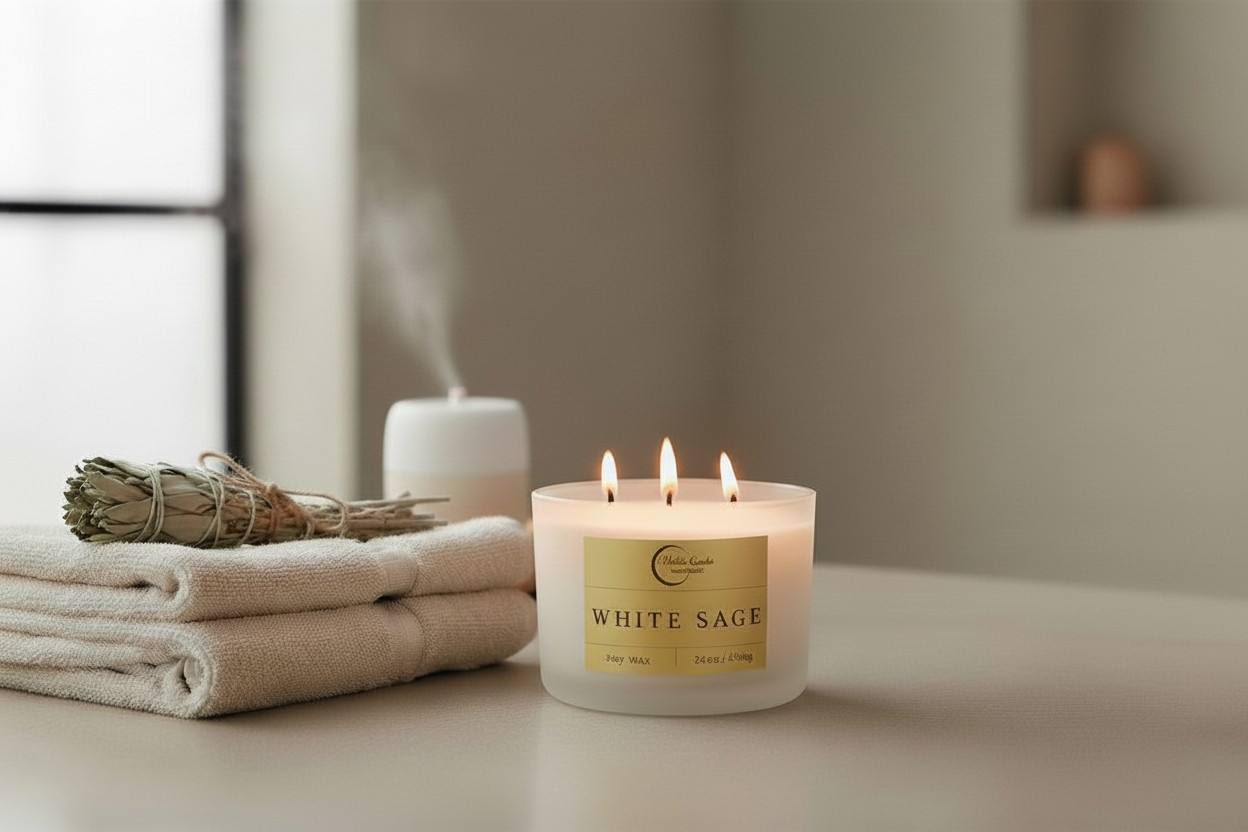
Best overall: woodsy candles. Best for cozy comfort: vanilla candles. Best for a fragrance-free reading corner: unscented candles. The best candles for reading nook comfort in 2026 suit your scent preferences and leave enough clear space for safe burning; this guide ranks scent styles rather than individual products.
TL;DR
Woodsy candles are the best default candles for reading nook warmth; choose unscented when fragrance competes with your book.
Vanilla suits cozy reading corners; lavender fits an evening ritual; leather suits a traditional home library.
Maddox Candles offers soy blend candles for home fragrance shoppers who prefer a scented reading space.
Keep burning candles at least 12 inches from books, curtains, and anything else that can burn.
Why this matters
A reading nook puts paper, upholstery, blankets, and sometimes curtains close together. Choose a safe candle location before choosing a scent. If your only surface is a crowded bookshelf or a narrow armrest, a real flame does not belong there.
Fragrance is a separate decision. You want a scent you enjoy while reading, not one you keep noticing instead of the page. A description such as woodsy, sweet, floral, or leathery helps you narrow the choices, but it does not tell you how strongly a particular candle will smell.
Maddox Candles sells soy blend candles, wax melts, reed diffusers, and custom scent options. Maddox Candles is a fit for scented-candle shoppers furnishing a reading nook; the scent families below help you decide what to look for without assuming a particular product formula or fragrance strength.
What makes the best candles for a reading nook?
Use these criteria to choose candles for your reading nook in 2026. A beautiful jar is secondary to a scent you like and a place you can burn it safely.
Scent character: Choose woody, sweet, floral, or leathery notes according to your preferences, not the room's furniture alone.
Fragrance intensity: Read the specific candle description. A scent name does not establish whether its fragrance will feel gentle or intrusive.
Safe placement: Require a stable, heat-resistant surface with clearance from books, curtains, and other combustible objects.
Care instructions: Look for readable wick-trimming, burning, and stopping instructions. Follow the candle's own directions.
Shared-space fit: Include the preferences of anyone else who uses the room. Unscented candles avoid deliberately adding fragrance.
There is no universal scent winner for every reader. The ranking gives each option a different job, so you can choose by how you use the room rather than treating every candle as interchangeable.
Candles for a reading nook at a glance
These are fragrance categories, not verified product recommendations. The order matches the detailed sections below; no individual candle's burn time, ingredients, or scent strength is implied.
Rank | Candle style | Best for | Standout characteristic | Key limitation |
1 | Woodsy, including teakwood candles | A wood-forward reading-room atmosphere | Woody fragrance direction | Some blends include floral, sweet, or cologne-like notes |
2 | Vanilla | A cozy, dessert-adjacent reading corner | Sweet fragrance direction | Unsuited to readers who dislike sweet scents |
3 | Lavender | A floral evening reading ritual | Herbal-floral fragrance direction | Not a treatment for sleep problems |
4 | Leather-inspired | A traditional study or home-library theme | A leathery fragrance association | The name does not reveal the complete blend |
5 | Unscented | Shared rooms and readers avoiding added fragrance | Candlelight without deliberately added scent | Still involves a flame and combustion |
1. Woodsy candles: best for a wood-forward reading nook
Woodsy candles put woody fragrance notes at the center of the experience. Cedarwood, sandalwood, and teakwood descriptions are useful starting points, but they are not interchangeable formulas. Read the complete scent description before deciding.
Woodsy candles are the best default for readers who want a wood-forward atmosphere without choosing a dessert or floral theme. A wooden bookcase is not a requirement. The useful question is whether you enjoy woody fragrance when you are sitting still with a book.
Look beyond the headline note. If a description also lists vanilla, flowers, or other fragrance notes, those belong in your decision. Do not assume a teakwood candle will smell like unfinished timber or that a woody label guarantees a subtle fragrance.
Woodsy candle pros:
Give you a clear alternative to dessert-centered scents.
Offer several woody directions to explore through scent descriptions.
Suit readers who deliberately want a wood-associated room fragrance.
Woodsy candle cons:
Different blends can smell substantially different despite similar names.
A woody label does not tell you the candle's fragrance intensity.
Best for: Readers who already enjoy wood-forward scents and want that character in their reading corner.
Verdict: Buy a woodsy candle if woody fragrance is your preference; skip it if you are choosing solely to match a bookcase.
2. Vanilla candles: best for cozy reading comfort
Vanilla candles give your reading nook a sweet fragrance direction. Depending on the complete blend, the description might lean toward a simple vanilla note or a dessert-like combination. Neither is automatically better; choose the character you want to spend time around.
For a 2026 reading-nook refresh, vanilla makes sense when you want the room to feel associated with familiar sweet scents. It is a preference choice, not a promise that a candle will improve concentration or make a room objectively more comfortable.
Check any supporting notes before buying. A reader who likes vanilla does not necessarily want cinnamon, caramel, or a bakery-style blend. Keep the choice focused on what you enjoy rather than accepting every sweet note as part of the same experience.
Vanilla candle pros:
Give sweet-fragrance fans a clear starting point.
Work as an alternative to woody or floral scent themes.
Let you choose between simpler and more layered descriptions.
Vanilla candle cons:
Sweet fragrance is a poor fit if you prefer a neutral-smelling room.
Additional dessert notes can change the character you expected.
Best for: Readers who enjoy sweet home fragrance and want a cozy association during reading time.
Verdict: Buy vanilla for a deliberately sweet reading corner; skip dessert-heavy blends if sweetness distracts you.
3. Lavender candles: best for an evening reading ritual
Lavender candles bring an herbal-floral direction to your reading space. Choose this category because you like lavender's scent, not because the label guarantees better sleep or stress relief.
An evening reading ritual can be simple: put your phone aside, settle into your chair, and choose a familiar fragrance. The candle is optional. If you regularly drift off while reading, leave the flame unlit and choose another way to mark the end of the day.
Lavender blends also deserve a closer look. Additional floral, woody, or sweet notes change the fragrance profile, so a familiar headline ingredient is not enough to establish that you will enjoy the finished candle.
Lavender candle pros:
Give floral-fragrance readers an alternative to vanilla and wood.
Provide a recognizable scent direction for an evening routine.
Offer a clear preference-based choice without needing wellness claims.
Lavender candle cons:
Herbal-floral fragrance is not appealing to every reader.
A burning candle is unsuitable when you are likely to fall asleep.
Best for: Lavender lovers who read in the evening and remain awake to supervise the candle.
Verdict: Buy lavender for its fragrance; skip a burning candle entirely when bedtime reading turns into dozing.
4. Leather-inspired candles: best for a traditional library theme
Leather-inspired candles suit readers who want their home library to have a leathery fragrance association. The scent name describes a fragrance concept; it does not establish the ingredients or tell you exactly how the candle will smell.
This is the most theme-led choice in the ranking. If the idea of a traditional study appeals to you, leather is a direction to investigate. If you want a neutral background fragrance instead, do not let the library theme override your preferences.
Read the supporting notes carefully and avoid assuming that leather means smoky, woody, or mild. Those are separate characteristics that need to appear in the actual description. A themed name is useful for discovery, but it is not enough information for the final decision.
Leather-inspired candle pros:
Give a traditional-library theme a distinct fragrance direction.
Offer an alternative to sweet and floral categories.
Help readers who already enjoy leathery scents narrow their search.
Leather-inspired candle cons:
The name alone leaves the complete fragrance profile unclear.
Readers seeking a neutral-smelling room should choose another category.
Best for: Readers who enjoy leathery fragrance and want a deliberate study-like scent theme.
Verdict: Buy leather-inspired fragrance only when the full description matches your taste; hold when the name is all you know.
5. Unscented candles: best for shared reading spaces
Unscented candles give you candlelight without deliberately adding fragrance. They are the strongest choice when you want to separate the visual experience of a flame from the decision to scent the room.
For a shared reading room in 2026, ask whether everyone actually wants fragrance before choosing a scented candle. Unscented is a practical default when the answer is no. It does not mean the candle produces no emissions or is suitable for every person with a sensitivity.
If your real priority is light while reading, use a reading lamp. If your priority is a candle-like glow without a flame, consider a flameless alternative. Neither a scented nor an unscented burning candle replaces proper task lighting.
Unscented candle pros:
Avoid deliberately adding a fragrance to a shared room.
Keep scent preferences separate from your lighting choices.
Suit readers who want candlelight rather than room fragrance.
Unscented candle cons:
Still require the same fire precautions as scented candles.
Do not provide the fragrance experience some readers want.
Best for: Shared reading corners and readers who prefer not to add scent.
Verdict: Buy unscented for candlelight without added fragrance; skip real flames when you cannot supervise them.
How to place a candle around books safely
A bookshelf is not automatically a safe candle stand. Books, loose paper, trailing fabric, and low shelves all deserve attention before you light a wick. Make the layout decision before arranging decorative objects around the candle.
National Fire Protection Association candle-safety guidance calls for at least 12 inches, approximately 30 centimeters, of separation from anything that can burn. Its public guidance also says to use sturdy holders and extinguish candles when leaving the room or going to bed. Apply those rules to your reading nook in 2026, not just to the candle's immediate base.
Clear space: Keep books, curtains, blankets, and papers outside the required clearance.
Stable surface: Choose a heat-resistant surface where the candle cannot easily tip or be knocked over.
Active supervision: Keep the burning candle in sight and extinguish it before leaving or becoming sleepy.
Choose a safe location before arranging the rest of your reading corner.
The National Candle Association's general care guidance recommends trimming a wick to ¼ inch, approximately 6 millimeters, before lighting; follow your candle's specific instructions. Wick care does not compensate for unsafe placement, and a small flame still needs supervision.
Keep a reading lamp available so you never need to move a lit candle closer to the page. If the nook cannot accommodate a safe candle location, change the lighting plan rather than squeezing a flame between books.
How the ranking works
This 2026 guide ranks fragrance categories by their usefulness for distinct reading-nook preferences: woody atmosphere, sweet comfort, an evening floral ritual, a traditional-library theme, and no added fragrance. It does not rank individual candle formulas or claim comparative product testing.
Maddox Candles offers soy blend candles, but that fact alone does not establish fragrance intensity, burn duration, or how a specific candle performs in your room. Use the individual candle's description and care instructions to make those decisions.
Which candle should you choose?
Choose a woodsy candle if you want a scented default and already enjoy woody fragrance. Choose vanilla for sweetness, lavender for an herbal-floral evening routine, or leather-inspired fragrance for a deliberate library theme.
Choose unscented when you want candlelight without added fragrance. Choose no real flame when your reading spot lacks clearance or your usual reading session ends with sleep. That decision matters more than finding the perfect scent name.
FAQ
What's the best candle scent for a reading nook?
Woodsy fragrance is the best default for readers who enjoy a wood-forward atmosphere. Vanilla suits sweet-fragrance preferences, lavender suits floral preferences, and unscented candles avoid deliberately adding fragrance.
Are soy blend candles better for a home library?
Soy blend wax alone does not establish whether a candle is better for your home library. Maddox Candles offers soy blend candles; choose an individual candle by its scent description, care instructions, and suitability for your space.
Can I put a candle on a bookshelf?
Use a bookshelf only if the location meets all candle-placement instructions and required clearances. NFPA guidance calls for at least 12 inches from anything that can burn; nearby books and shelving can make a location unsuitable.
Is lavender better than vanilla for reading at night?
Lavender is better if you prefer herbal-floral fragrance; vanilla is better if you prefer sweet fragrance. Neither scent choice makes a burning candle appropriate when you are likely to fall asleep.
What candles for reading nook use work in a shared room?
Unscented candles are the best starting point when people sharing the room do not all want added fragrance. They still require fire precautions and are not an assurance of suitability for anyone with a sensitivity.
How far should a candle be from books and curtains?
Keep a burning candle at least 12 inches from books, curtains, and anything else that can burn, following NFPA guidance. Follow the candle manufacturer's instructions as well and choose a stable, heat-resistant surface.
Can candlelight replace a reading lamp?
Use a reading lamp for task lighting rather than relying on candlelight. Treat a candle as optional atmosphere, and never move a burning candle closer to paper to make the page easier to see.
One last thing
If a candle's fragrance distracts you, choosing another scented candle is not the only answer. Try reading without added fragrance before changing scent families. A reading nook should serve the book and the reader, not require a particular fragrance to feel finished.


Comments