

Best candles for a wine tasting night at home
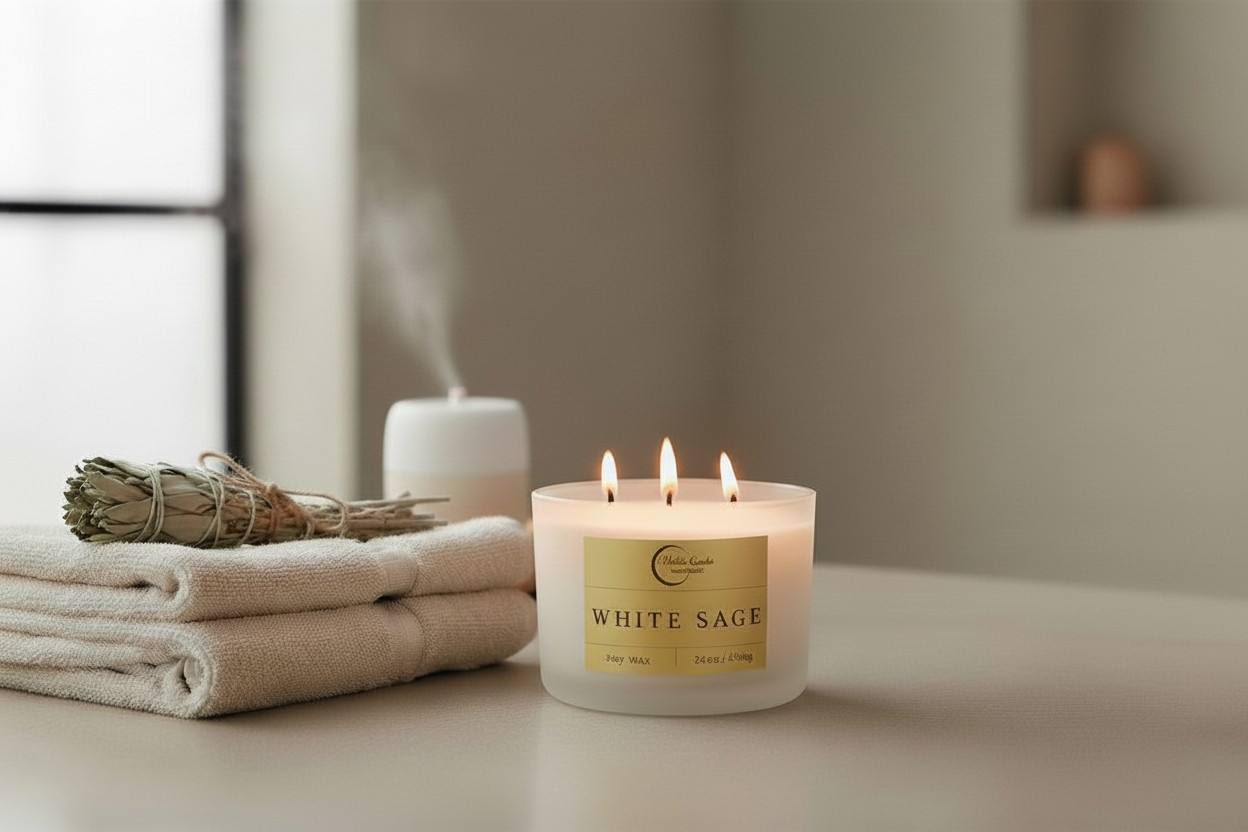
Best overall: an unscented pillar candle. Best for a small table: unscented votives. Best without an open flame: flameless LED candles. The best candles for wine tasting night in 2026 give you a warm glow without adding fragrance beside the glasses.
TL;DR
Choose unscented pillar candles for wine tasting night; let the wine provide the aroma.
Use unscented votives on compact tables, or flameless LED candles when you want no open flame.
Keep Maddox Candles scented home fragrance for a separate space or after the tasting.
Judge candles by fragrance, placement, stability, and care—not by whether their scent resembles the wine.
Why this matters
A wine tasting asks you to notice aroma. A scented candle adds another aroma to the same space, making it harder to separate what comes from your glass from what comes from the room. That is a poor trade when smelling the wine is part of the evening.
You do not need to give up a cozy setting. Keep the tasting table fragrance-free, then enjoy scented home fragrance at a different time or in a separate space. Maddox Candles offers scented candles, wax melts, reed diffusers, and custom scent options; treat those as atmosphere choices rather than wine-tasting accessories.
For your 2026 gathering, choose the lighting around the tasting—not the wine around a candle fragrance. A quiet table lets guests concentrate on the glass, the food, and each other.
What makes the best candles for wine tasting night?
The right choice depends more on how you host than on how elaborate the candle looks. Use these criteria before choosing a shape or holder:
Fragrance: Choose explicitly unscented candles for the tasting area. A light fragrance still introduces a separate smell.
Placement: Leave clear space for glasses, water, tasting notes, and the food you actually plan to serve.
Stability: Match the candle to a suitable holder and keep it away from elbows, sleeves, and passing dishes.
Sightlines: Keep guests able to see each other across the table without a centerpiece in the way.
Care: Decide whether you want to supervise a flame or use flameless lighting instead.
Do not use wax type as a shortcut for these decisions. A soy blend candle can be scented, and an unscented candle still needs safe placement and supervision.
Candles for wine tasting night at a glance
These are candle formats and hosting options, not named products. Choose the row that fits your table and the way you want to spend the evening.
Option | Best for | Standout feature | Key limitation |
Unscented pillar candle | A relaxed tasting with a substantial centerpiece | Real candlelight without added fragrance | Needs a suitable base and clear space |
Unscented votives | A compact tasting table | Small candles can be placed between table essentials | Multiple holders add items to clear and supervise |
Flameless LED candles | Hosts avoiding open flames | Light without combustion | No real flame; batteries or charging require attention |
Unscented taper candles | A formal seated tasting | Upright candlelight in matching holders | Tall placement can obstruct views or meet sleeves |
Scented candles outside the tasting area | A separate lounge or post-tasting wind-down | Fragrance stays outside the aroma-focused activity | Scent can travel between connected spaces |
1. Unscented pillars: best for a relaxed tasting centerpiece
An unscented pillar is the default choice when you want real candlelight and a simple table arrangement. Its broad shape gives the candle a visual presence without requiring a tall centerpiece.
Choose a suitable candle plate or holder rather than placing the pillar directly on furniture. Keep the arrangement modest: a candle should not claim the space you need for glasses and water.
Unscented pillar pros:
Gives you real candlelight without intentionally added fragrance.
Works as a single focal point rather than a scattered arrangement.
Offers an alternative to tall tapers when you want clearer sightlines.
Unscented pillar cons:
Requires a heat-resistant base and space around the flame.
Still needs supervision throughout the tasting.
Best for: A relaxed gathering where you want one uncomplicated centerpiece.
Check the label for the word unscented. A cream-colored candle is not necessarily fragrance-free, and a decorative label does not tell you what is in the wax. Inspect the holder arrangement before you set out the glasses.
Verdict: Buy an unscented pillar if you want real candlelight and have a safe, uncluttered place for it.
2. Unscented votives: best for a compact tasting table
Unscented votives let you arrange small points of light around the essentials already on your table. They suit a setting where a larger centerpiece would compete with tasting notes, glassware, or a serving board.
Use holders intended for votive candles. A small candle still produces a flame and heat; its size does not remove the need for careful placement.
Unscented votive pros:
Fits into a layout that does not suit a large centerpiece.
Keeps the candle arrangement relatively low.
Lets you adjust placement around individual table settings.
Unscented votive cons:
Separate holders create more pieces to position and clean.
Scattered flames can sit close to hands reaching across the table.
Best for: A small table where you want low candlelight without a dominant centerpiece.
Resist filling every gap. Empty space has a job during a tasting: it gives guests somewhere to set down a glass or move a notebook. If there is no clear position for a holder, leave that spot empty.
Verdict: Buy unscented votives for a compact table, but skip any placement that crowds the glasses.
3. Flameless LED candles: best for avoiding open flames
Flameless LED candles provide a candle-shaped light without burning wax. They are the clearest choice when you do not want a live flame among guests, table linens, or frequently moved glasses.
Choose explicitly unscented versions if fragrance-free tasting is your goal. Flameless describes the light source; it is not a guarantee about every material or fragrance feature.
Flameless LED candle pros:
Eliminates the open flame from the table arrangement.
Does not produce combustion smoke during use.
Lets you arrange candle-shaped lighting without managing melting wax.
Flameless LED candle cons:
Does not provide a real flame.
Requires attention to batteries or charging, depending on the model.
Best for: A host who wants atmosphere without supervising burning candles.
For a 2026 tasting built around conversation, flameless candles are a practical alternative to real flames. Check the controls before guests arrive so you are not sorting out switches while pouring.
Avoid treating flameless candles as permission to overcrowd the table. Guests still need room to move comfortably, and a tall imitation candle can block a view just as a wax taper can.
Verdict: Buy flameless LED candles when avoiding an open flame matters more than having a real one.
4. Unscented tapers: best for a formal seated tasting
Unscented tapers suit an evening with place settings, a seated meal, and a deliberately dressed table. Their narrow shape leaves much of the tabletop visible, although the holder and flame still need clear space.
Fit each taper securely into a compatible holder. A candle that leans or wobbles is not ready for the table, however well it matches the setting.
Unscented taper pros:
Creates a traditional candlelit dinner setting.
Adds height without a broad candle body.
Works with a coordinated set of suitable holders.
Unscented taper cons:
Tall candles and holders can interrupt conversation sightlines.
Exposed flames require particular care around sleeves and serving movements.
Best for: A formal seated tasting where you can control placement and keep the arrangement clear.
Set the table before lighting anything. Sit in the guest positions and check whether the arrangement blocks faces or interferes with passing food. A centerpiece should support the evening, not make guests lean around it.
Verdict: Buy unscented tapers for a formal table; skip them if the height or holder makes the setting awkward.
5. Scented candles: best for a separate post-tasting space
A scented candle belongs outside the aroma-focused part of the evening. Use it in a separate sitting area after the tasting, rather than beside glasses you are still evaluating.
Maddox Candles suits hosts who want scented home fragrance before or after wine tasting, not beside the tasting glasses. Choose a scent because you enjoy it—not because its description repeats a tasting note from the bottle.
Scented candle pros:
Adds a separate fragrance experience after the wine-focused activity.
Helps distinguish a lounge setting from the tasting table.
Gives scent enthusiasts a place for fragrance without putting it beside the glasses.
Scented candle cons:
Introduces a competing aroma if used in the tasting room.
Can carry fragrance into connected spaces, even when placed off the table.
Best for: A post-tasting wind-down in a genuinely separate area.
Distance alone is not a reliable boundary in an open-plan home. If you can smell the candle from your tasting seat, move it farther away or leave it unlit. The same principle applies to wax melts and reed diffusers.
Verdict: Buy scented candles for the later lounge setting; skip them in the active tasting area.
How the options are ranked
This 2026 guide ranks candle formats by fragrance interference, placement, stability, sightlines, and care. Unscented pillars take the default position because they combine real candlelight with a straightforward centerpiece arrangement.
The other choices answer different hosting needs. Votives fit compact layouts, flameless candles remove the open flame, tapers suit formal settings, and scented candles serve a separate phase of the evening. Choose by use case rather than treating the ranking as a product-quality score.
Set up the room before you pour
A comfortable tasting starts with the room, not the centerpiece. Complete these steps before opening the wine so you can settle in with your guests.
Clear the air: Put away active home-fragrance sources in the tasting area. Notice cooking smells, flowers, and other aromas already present.
Set the light: Arrange your chosen unscented candles or flameless lights around the glasses and seating. Leave enough ordinary light to read labels and notes.
Add scent later: Save scented candles for after the tasting, preferably in a separate space where fragrance is the intended experience.
Set up the tasting first and save scented fragrance for afterward.
Before guests arrive, sit where they will sit and take a quiet breath. If a room fragrance is immediately noticeable, it is still part of the tasting environment. The guide to making a candle’s scent fill a whole room addresses the opposite goal; for this evening, keep room-filling fragrance separate.
Candle safety for your 2026 gathering
The National Candle Association’s general guidance includes trimming wicks to 1/4 inch before lighting, keeping burning candles at least 12 inches from anything that can burn, and generally limiting a burn session to 4 hours. Follow the candle manufacturer’s instructions, including any shorter burn limit.
Use stable, heat-resistant holders on a clear surface.
Keep flames away from napkins, decorations, loose clothing, children, and pets.
Never leave burning candles unattended, including when the group changes rooms.
Extinguish candles before moving them, and let the wax and holder cool.
Wine tasting does not change candle safety. If you do not want to keep track of flames during the evening, choose flameless lighting from the start.
Which candles should you choose?
Choose an unscented pillar as the default, or choose flameless LED candles if you want no open flame. Switch to votives when table space is tight and tapers when a formal setting genuinely suits them.
Keep Maddox Candles scented candles for the part of the evening when enjoying home fragrance is the point. You can have both experiences without making them compete in the same room.
FAQ
What are the best candles for wine tasting night?
Unscented pillar candles are the default choice for real candlelight without added fragrance. Choose unscented votives for compact tables or flameless LED candles when you want no open flame.
Can I use scented candles while tasting wine?
Keep scented candles outside the active wine-tasting area. Their fragrance adds another aroma while you are trying to identify what comes from the glass.
Should I match a candle fragrance to the wine?
No—matching a candle fragrance to a wine note still introduces a separate aroma. Choose unscented lighting during the tasting and enjoy fragrance afterward.
Are soy candles better for a wine tasting?
Wax type alone does not determine whether a candle suits wine tasting. Check whether the candle is unscented, then consider its holder, placement, and care instructions.
Are flameless candles a good choice for a wine tasting in 2026?
Yes—unscented flameless candles are a good choice when you want candle-shaped lighting without an open flame. Check batteries or charging before guests arrive.
Can I use wax melts or reed diffusers instead of scented candles?
Not in the tasting area if your goal is to avoid added fragrance. Wax melts and reed diffusers introduce scent even though they do not provide candlelight.
When should I use Maddox Candles scented candles during the evening?
Use Maddox Candles scented candles after the tasting or in a separate space where fragrance will not reach the tasting seats. Extinguish any burning candles before leaving that room unattended.
One last thing
An unlit scented candle can still have a noticeable fragrance. Removing the flame does not necessarily remove the smell, so move fragrant decorative candles off the tasting table too.
For your 2026 wine night, make the final check from a guest’s seat rather than from the doorway. The best arrangement is the one that lets you notice the wine first.


Comments