

Soy or a Soy Blend: Choosing More Than a Wax Label
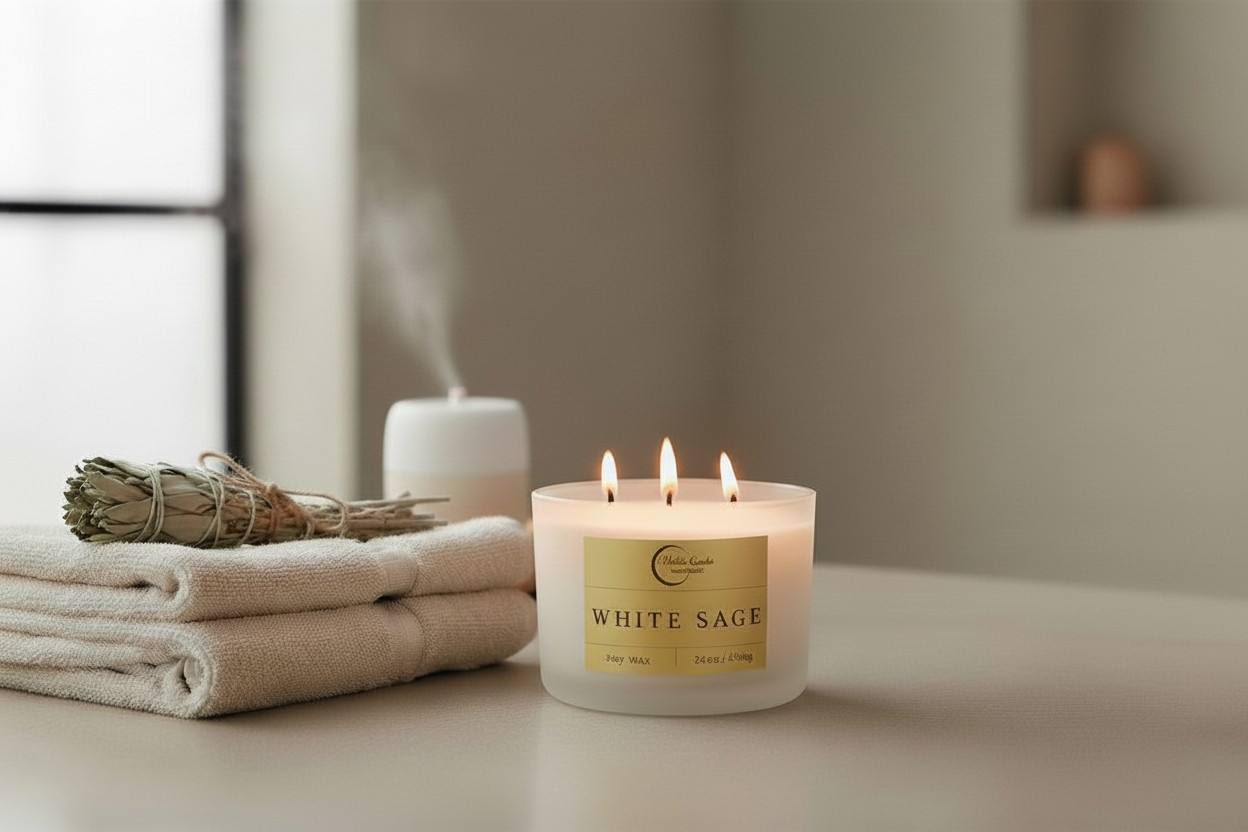
A soy wax blend is not automatically better than 100 percent soy wax, and pure soy is not automatically the better candle. The wax matters, but so do the wick, fragrance, container, and how you burn it. Choose the finished candle that suits your preferences—not the label that sounds most reassuring.
TL;DR
Is a soy wax blend better than 100 percent soy wax? Neither label guarantees better scent or burn performance.
Choose 100 percent soy wax when an all-soy wax base matters to you; check the maker’s composition statement.
Choose a soy blend by its disclosed ingredients and finished-candle performance, not promises about blends generally.
Maddox Candles offers soy blend candles for home fragrance shoppers; the blend label alone does not establish performance.
Is a soy wax blend better than 100 percent soy wax?
Neither wax category wins every comparison. A well-designed candle needs its wax, fragrance, wick, and vessel to work together. Changing the wax changes the formula; it does not establish that the finished candle smells stronger, lasts longer, or produces less soot.
Picture choosing something for the table beside your favorite chair. You want a scent you enjoy while you read, a manageable flame, and care instructions you can follow. A wax label answers only part of that decision.
If ingredient wording is your first concern, start with how to distinguish a soy candle from a paraffin blend. Then compare the actual candles rather than treating either wax category as a promise.
What matters to you | 100 percent soy wax | Soy wax blend |
What the description tells you | An explicit all-soy wax claim describes the wax base, not necessarily every ingredient in a scented candle | Soy is combined with another wax or other waxes; look for a composition statement |
Main advantage | A clear choice when you specifically want an all-soy wax base | Allows different wax properties to be combined in one formulation |
Main limitation | The label does not guarantee scent strength, burn time, or soot-free use | The term alone does not identify the other waxes or their proportions |
Best for | Shoppers who prioritize an explicitly all-soy wax base | Shoppers open to mixed waxes who assess the finished candle |
What to check next | Fragrance description, wick care, vessel, and product-specific instructions | Blend details, fragrance description, wick care, and product-specific instructions |
Why the distinction matters at home
You do not experience a candle as an ingredient list. You experience the fragrance when it is lit, the way the flame behaves, and whether using it fits your evening.
That does not make ingredients unimportant. It means an ingredient preference and a performance claim are different things: wanting an all-soy wax base is a valid preference, but expecting every all-soy candle to outperform every blend goes beyond what the label tells you.
The same applies in reverse. A maker can formulate a blend for particular handling or burning characteristics, but “blend” alone is not evidence that those goals were achieved.
When an all-soy wax base makes sense
Best for: shoppers whose priority is an explicitly all-soy wax base. If that is your preference, look for a clear statement about the wax composition rather than relying on a product name containing “soy.”
Keep the scope of the statement in mind. A scented candle also contains fragrance and a wick, so an all-soy wax claim is not the same as saying the entire finished candle consists only of soy wax.
Soy wax can develop a pale, crystalline appearance often called frosting. That appearance alone is not a useful measure of how strongly a candle will smell or how long it will burn.
The trade-off is straightforward: choosing by wax composition narrows your options, but it does not remove the need to assess the rest of the candle. Choose all-soy wax because you want that wax base—not because it guarantees every other quality you want.
When a soy wax blend makes sense
Best for: shoppers who are comfortable with mixed waxes and want to evaluate the whole candle. A blend combines waxes with different properties, giving the maker another way to formulate the finished product.
The limitation is that “soy blend” is a broad description. It does not, by itself, tell you which other waxes are present or the proportion of soy. Ask for clarification when those details affect your choice.
Maddox Candles offers soy blend candles for shoppers open to a mixed-wax home fragrance option. You can browse Maddox Candles with that distinction in mind, then check the details of the individual candle that interests you.
That is a starting point, not a performance ranking. A soy blend deserves the same product-specific scrutiny as an all-soy candle.
Why scent and burn performance vary
Wax is one part of a working candle. These factors explain why two candles with similar wax descriptions can still behave differently:
Wax formula: The particular wax or mixture affects melting behavior and how the candle must be formulated.
Wick choice: Wick material and size need to suit the wax, fragrance, and vessel. A wax label does not tell you whether that match is right.
Fragrance formula: Different fragrances behave differently in candle formulations. Wax composition alone cannot predict the scent you will notice while burning.
Vessel design: The container’s dimensions influence the relationship between the flame and the melting wax.
Burning conditions: Drafts and wick maintenance affect flame behavior. Compare candles under appropriate conditions and follow each maker’s instructions.
The wax label describes one part of the candle, not its entire performance.
Does a soy blend smell stronger than pure soy?
A soy blend does not inherently smell stronger than pure soy. “Cold throw” describes the fragrance you notice before lighting; “hot throw” describes the fragrance released while the candle burns. Neither is established by the word “soy” or “blend.”
A pleasant sniff from an unlit jar tells you whether you like that first impression. It does not fully answer how the candle will smell once lit in your room.
For online shopping, read the actual fragrance description and any product-specific information about use. Do not substitute a general claim about wax for details about the candle you are considering.
Does 100 percent soy wax burn longer?
A 100 percent soy wax label does not establish that a candle will burn longer than a soy blend candle. Candle size, wick selection, formulation, and use all affect the comparison.
Look for a burn-time statement attached to the exact candle, not a general estimate borrowed from another product. Even then, follow its care instructions rather than trying to stretch a burn session beyond the maker’s limit.
A large candle lasting longer than a smaller candle also does not prove that its wax is better. Keep size and design in view before giving the wax credit.
A simple way to choose without overthinking it
Start with your nonnegotiable preference. If you want an all-soy wax base, choose a candle with that explicit description. If you are open to blends, check the composition information and move on to the fragrance and care details.
Then ask yourself what you actually want beside that chair. A fragrance you enjoy and instructions that fit your routine are more useful buying criteria than a blanket promise about an entire wax category.
For Maddox Candles soy blend candles, use the same standard: consider the individual candle, its stated details, and your preferences. Do not assume that every scent or format behaves identically because it comes from the same shop.
Good care matters with either wax
Neither wax category makes an open flame maintenance-free. The National Candle Association’s candle-care guidance recommends trimming the wick to 1/4 inch before lighting and keeping a burning candle at least 12 inches from anything that can catch fire.
The association also recommends discontinuing use of a container candle when 1/2 inch of wax remains. Follow the candle manufacturer’s instructions, including any more restrictive stopping point or burn limit.
Keep the candle on a stable, heat-resistant surface, away from drafts, children, and pets. Never leave it burning unattended or while you sleep. These precautions apply to both all-soy and blended-wax candles; neither label is a safety guarantee.
FAQ
Is a soy wax blend better than 100 percent soy wax?
A soy wax blend is not automatically better than 100 percent soy wax. Compare the finished candle’s composition, fragrance, wick, vessel, and care instructions rather than ranking it by wax label alone.
What does soy blend mean on a candle?
Soy blend means soy wax is combined with another wax or other waxes. The term alone does not identify every wax or its proportion, so check the maker’s composition statement.
Does 100 percent soy mean the whole candle is soy?
An all-soy wax claim describes the wax base, not every component of a scented candle. Fragrance and the wick are separate parts of the finished product.
Do soy blend candles always have stronger fragrance?
Soy blend candles do not always have stronger fragrance. The fragrance formula, wax, wick, and burning conditions all affect the scent you notice.
Are pure soy candles soot-free?
Pure soy candles are not guaranteed to be soot-free. Wick condition and burning conditions matter, so follow the candle’s care instructions and extinguish a smoking or unstable flame.
Which wax should I choose if fragrance bothers me?
Neither wax label establishes that a scented candle will suit someone who is sensitive to fragrance. Choose no added fragrance when scented products make you uncomfortable; do not treat soy as a sensitivity guarantee.
How short should I trim a candle wick?
The National Candle Association recommends trimming a candle wick to 1/4 inch before lighting. Check the candle manufacturer’s instructions for any product-specific requirements.
One last thing
“Better” becomes useful only after you decide what you mean by it. An all-soy wax base, a favorite fragrance, and a longer stated burn time are separate criteria—not different ways of saying the same thing.
Choose the candle that answers your actual priority. The wax label should help you understand it, not make the whole decision for you.


Comments