

How to pick a candle scent that matches your home's style
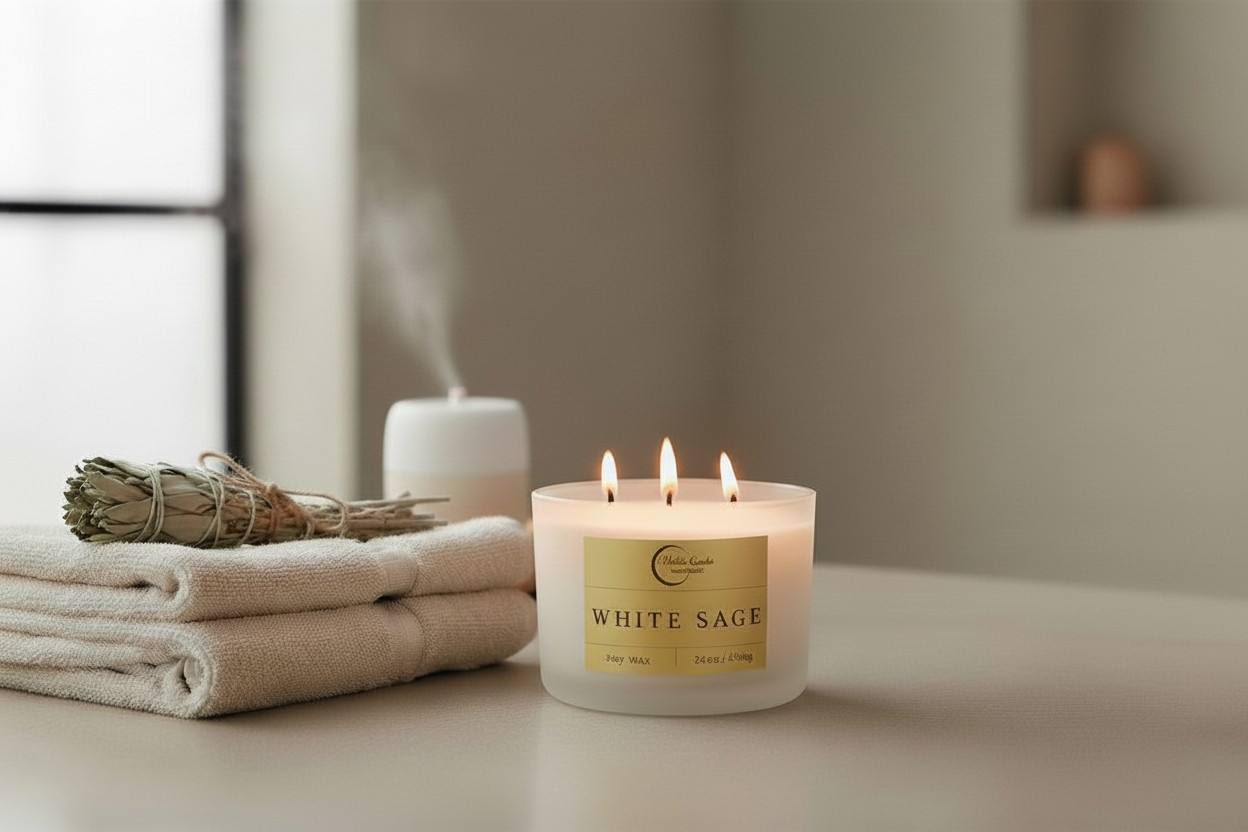
Choose a candle scent by matching the mood you want at home with a fragrance family you already enjoy, then check how it feels in the room where you will use it. Let your décor suggest a starting point—not dictate the answer—and consider competing smells, personal sensitivities, and everyone who shares the space. For a 2026 home refresh, choose for the way you live before choosing for the way your room looks.
TL;DR
Learning how to choose a candle scent starts with personal preference, then room purpose and décor.
Maddoxcandles suits home fragrance shoppers exploring scented candles, wax melts, reed diffusers, and custom scent options.
Use woody, floral, citrus, or gourmand notes as starting points—not fixed rules for decorating styles.
Judge fragrance in its intended room; an appealing unlit candle does not settle the decision.
Why this matters
A candle can look right on your shelf while smelling wrong for your evening. A sweet fragrance you enjoy during breakfast might not be what you want beside dinner, and a smoky note that suggests a cabin might clash with your own idea of comfort.
Maddoxcandles is best for home fragrance shoppers who want to explore candles, wax melts, reed diffusers, and custom scent options. Start with your preferences before browsing Maddoxcandles, rather than letting an attractive fragrance name make the decision.
How do you choose a candle scent that matches your home's style?
Use this sequence to turn an abstract decorating idea into a practical scent choice. You do not need a different fragrance for every room or a collection built around every season.
Choose the room. Start with 1 room where you actually spend time. Picture its everyday use, not just how it looks in a photograph.
Name the feeling. Write 3 words describing the atmosphere you want, such as airy, quiet, and welcoming. These words become your filter.
Recall familiar smells. Think about cut flowers, fresh citrus peel, coffee, wood, or other smells you genuinely enjoy. Separate pleasant memories from notes you simply think you should like.
Choose a fragrance family. Use the comparison below to connect your preferences with a possible direction. Read the full scent description rather than relying on the name alone.
Check the room's other smells. Consider cooking, fresh flowers, cleaning products, and fragrance from adjoining spaces. Decide whether you want another scent competing for attention.
Try it during normal use. Follow the candle's care instructions and evaluate it while you are using the room normally. Notice whether you want to keep smelling it—not just whether you can detect it.
The useful result is a clear brief: a citrus-led candle for your bright kitchen, for example, rather than an undefined search for something nice. Keep that brief for your 2026 shopping so an appealing description does not pull you away from your actual preference.
Which scent families fit different decorating styles?
Treat these pairings as starting points for your own taste, not rules about what a home must smell like. The best match is the one you enjoy in the space; a minimalist room does not require citrus, and a traditional room does not require flowers.
Fragrance direction | Best for | Style pairing to try | What to weigh before choosing |
Citrus and green | You enjoy bright, fresh-smelling notes | Airy, simple rooms or a kitchen | Check whether you like the sharpness as much as the freshness |
Floral | You enjoy the smell of flowers | Romantic details, garden references, or a reading corner | Choose familiar flowers rather than assuming all florals smell alike |
Woody | You enjoy wood-inspired fragrance | Timber furniture, earthy colors, or a study | Read for added smoke, sweetness, or spice |
Gourmand | You enjoy food-inspired scents | A breakfast nook or cozy gathering space | Decide whether you want sweetness outside mealtimes |
Smoky and leather-inspired | You enjoy fireside or leather-like notes | A den, cabin-inspired room, or layered interior | Choose only if you enjoy the note itself, not just the decorating association |
Marine and airy | You enjoy water-inspired fragrance descriptions | Coastal references or open, uncluttered rooms | Check the listed notes; the name alone leaves too much unanswered |
Citrus and green: best for a fresh-feeling direction
Start here if you enjoy citrus peel, herbs, or leafy smells. These associations offer a useful starting point for a bright kitchen, but freshness is still a preference—not proof that a fragrance will suit everyone.
The trade-off is sharpness. If you dislike tart or grassy smells, choose another family rather than forcing the match; the guide to lemongrass candles for a fresh kitchen gives you a specific direction to consider.
Floral: best for flower lovers
Choose floral notes because you enjoy flowers, not because the room has floral wallpaper. Use a flower you recognize as your reference, then read what else appears in the blend.
The advantage is a familiar sensory starting point. The limitation is the broad label: a description that says only floral gives you less to work with than one naming the flowers and accompanying notes.
Woody: best for wood-inspired comfort
Try woody fragrance if timber, forest walks, or wood-like smells are part of your idea of a comfortable room. It is a reasonable direction to explore beside natural materials without making the décor a strict prescription.
Read beyond the leading note. A woody description accompanied by sweet or smoky notes asks a different question of your preferences than wood alone.
Gourmand: best for food-scent enthusiasts
Consider food-inspired fragrance if coffee, baking, or dessert smells make a room feel welcoming to you. This can be an enjoyable choice for a breakfast area or an evening spent reading.
The drawback is context. Ask whether you still want that food association during dinner, after cleaning the kitchen, or while working nearby.
Smoky and leather-inspired: best for deliberate atmosphere
Choose these notes when you specifically enjoy their smell. A fireside association can support a cabin-inspired room, but the decorating story is not a reason to overlook a note you dislike.
The same caution applies to leather-inspired fragrance. Treat it as a sensory preference rather than a requirement for a study or a particular person's space.
Marine and airy: best for water-inspired preferences
Explore this direction if seaside and water-inspired descriptions appeal to you. Let a coastal palette introduce the idea, then use the actual scent notes to judge it.
The limitation is the imagery. An ocean-related name describes an association; it does not tell you everything you need to know about the fragrance inside.
How do you connect scent with your actual room?
Look at your room's materials, activities, and existing smells before choosing another decorative object. For your 2026 refresh, use the space as it is now—not the version you hope to create later.
Use materials as prompts
Write down the materials that stand out: pale wood, linen, dark timber, ceramic, or upholstery. Then ask what smells you personally associate with them. There is no need to match every material literally.
A room with dark furniture can still suit a flower-inspired fragrance if that is what you enjoy. Your décor supplies ideas; your preference makes the decision.
Use the room's materials as inspiration without treating them as fragrance rules.
Picture the ordinary occasion
Imagine 2 occasions: a quiet moment alone and a normal shared evening. Would you want the same scent in both situations? If not, choose for the occasion that matters most rather than searching for a candle that does everything.
For a dining space, give the food a say. For a home office, ask whether you want a noticeable fragrance while concentrating. A room label alone cannot answer either question.
Include the people who share the space
Ask about disliked notes and fragrance sensitivities before settling on a shared-room candle. Your favorite scent is not automatically a good choice for a household member or guest.
If fragrance causes discomfort, stop using it. An unscented setting is a valid outcome, not a decorating problem to solve with a different fragrance.
Why does the same scent choice work differently across rooms?
Room style is only part of the decision. These factors give you a more useful way to compare choices without pretending that a fragrance name predicts the whole experience:
Personal associations. Start with smells you enjoy rather than copying someone else's idea of cozy.
Room purpose. Decide whether you want fragrance during meals, work, reading, or conversation.
Existing smells. Notice cooking, flowers, cleaning products, and other home fragrance before adding a candle.
Shared preferences. Give household members' dislikes and sensitivities a place in the decision.
The full blend. Read accompanying notes instead of judging solely by the scent named first.
The setting. Evaluate the candle in its intended room, following its instructions, rather than making the final decision elsewhere.
Keep these checks in your 2026 home-fragrance notes. A short record of what you liked—and what you did not—gives your next purchase a clearer starting point.
Should every room in my home have the same candle scent?
No, every room does not need the same candle scent. Start with a fragrance you enjoy in your main living space, then decide whether another room needs fragrance at all.
If adjoining spaces share air, avoid treating each as an isolated scent project. Try your choices separately before deciding whether you enjoy them together.
Should I choose a candle by its name or its scent notes?
Choose by the scent notes, using the name only as an introduction. A name such as woodland or coastal suggests a scene, but the description gives you more specific details to compare with your preferences.
For your 2026 shortlist, record the notes you want and the notes you avoid. This is more useful than collecting names that sound attractive but tell you little about your taste.
Can I choose a candle scent without smelling it first?
You can narrow your choice without smelling it first, but a description cannot replace your own experience. Start with familiar notes, read the complete description, and avoid assuming that similar names mean identical fragrances.
Maddoxcandles offers custom scent options alongside its home fragrance categories. Consider that route when you have a clear preference to discuss, while checking the current details rather than assuming how customization works.
FAQ
What's the best way to choose a candle scent for my home?
Choose a familiar fragrance family, then match it to the room's purpose and your preferred atmosphere. Use décor as inspiration, and evaluate the candle in the room where you intend to use it.
What candle scent goes with a minimalist living room?
A minimalist living room does not require a particular candle scent. Try citrus, green, or woody notes if you enjoy them, but choose by personal preference rather than the room's visual simplicity.
Should my candle smell like the season?
Your candle does not need to match the season. Seasonal associations are useful prompts, but a fragrance you enjoy throughout the year is an equally valid choice.
How do I choose a candle scent for a shared home?
Choose a shared-home candle with everyone's preferences and sensitivities in mind. Ask about disliked notes before buying, and leave the space unscented if fragrance causes discomfort.
Is a stronger candle scent always better?
A stronger candle scent is not automatically better. Choose an experience you enjoy during normal room use rather than treating noticeability as the only measure of a good match.
Can I use different candle scents in adjoining rooms?
You can use different candle scents in adjoining rooms, but judge whether you enjoy them together. Try them separately first instead of assuming that individually appealing fragrances will make a pleasing combination.
Does an unlit candle tell me how it will smell when burning?
An unlit candle gives you an initial impression, not a complete answer about its use in your room. Follow the candle's instructions and evaluate the fragrance during normal use before deciding whether it suits the space.
One last thing
Write your avoid list before your wish list. Knowing that you dislike sweet, smoky, or sharply green notes gives you a practical filter when descriptions all sound inviting.
Keep the brief simple: the room, the feeling, the notes you enjoy, and the notes you avoid. That is a better starting point than trying to make your home smell like somebody else's photograph.


Comments