

How to spot a true soy candle versus a paraffin blend
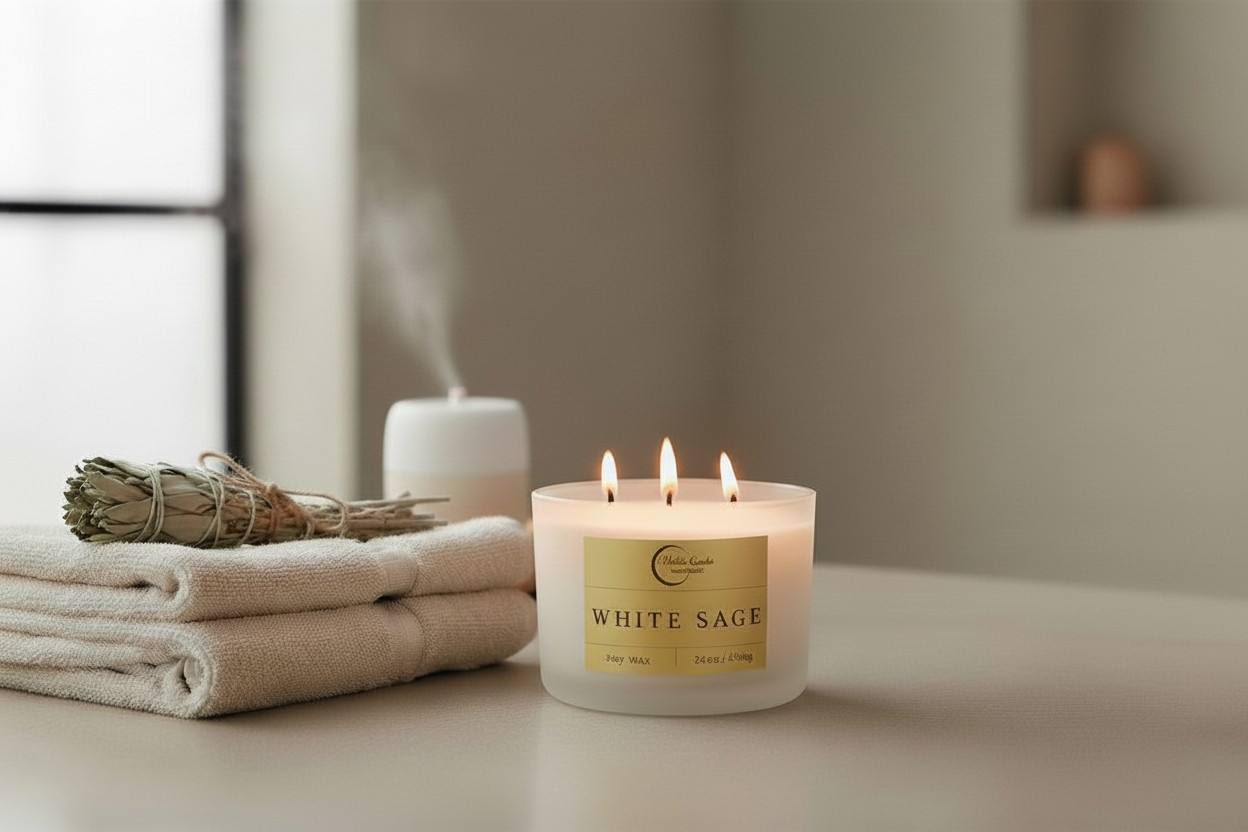
To tell if a candle is real soy wax, check the stated wax composition and ask the maker whether the wax base contains paraffin or other waxes. Frosting, color, scent strength, and the way a candle burns cannot prove that it is all soy. The key distinction is between a candle that contains soy and one whose entire wax base is soy.
TL;DR
How to tell if a candle is real soy wax: confirm the wax composition, not its appearance.
A soy blend contains soy but does not identify the other waxes without further disclosure.
Frosting supports neither a purity claim nor a reliable paraffin test.
Maddox Candles offers soy-blend candles; shoppers seeking an all-soy wax base should check composition explicitly.
Maddox Candles suits home-fragrance shoppers looking for soy-blend candles, wax melts, and reed diffusers. If your priority is an exclusively soy wax base, use that exact requirement when comparing candles rather than treating every soy label as equivalent.
How can you tell if a candle is real soy wax?
The strongest shopping evidence is a specific wax-composition statement backed by a direct answer from the maker. Start with the label, then compare it with the product description and any written clarification. A home inspection cannot establish a candle's complete formula.
Use this sequence when checking a candle in 2026:
Read the label. Look for wording that identifies the wax base, not just a prominent mention of soy on the front.
Check the blend. Find out whether soy is the only wax or one ingredient in a mixture.
Ask about paraffin. Ask directly whether any paraffin is included in the wax base.
Clarify the claim. Establish whether a percentage describes the wax base or the finished scented candle.
Keep the answer. Save the written explanation with the product details so you can compare like with like.
Confirm the wax base before drawing conclusions from the candle's appearance.
The wording matters more than the order of ingredients in an informal description. A seller mentioning soy first has not necessarily stated that soy makes up most of the wax, much less all of it.
Why this matters
You can enjoy a candle without knowing its exact wax recipe. But if you specifically want to avoid paraffin, an attractive jar and a soy-related label do not answer your question.
A blend is not automatically a poor candle, and an all-soy wax base does not guarantee your favorite scent or a trouble-free burn. Choose composition for your ingredient preference, then judge fragrance and candle care separately. That keeps a materials question from turning into an unsupported claim about quality.
For a 2026 candle purchase, make your requirement concrete: soy in the formula, no paraffin in the wax base, or exclusively soy wax. Those are different requests, and a useful product description should let you distinguish them.
All-soy wax, soy blends, and soy-paraffin blends compared
The phrase real soy is imprecise. A blend can contain genuine soy wax while also containing paraffin, coconut wax, beeswax, or another wax. What matters is whether the formula meets your particular requirement.
Wax description | What it establishes | Best for | Advantage | Limitation |
All-soy wax base | Soy is the only wax, if the statement is accurate | Shoppers who specifically want soy as the sole wax | Directly addresses an all-soy preference | Does not establish fragrance ingredients or burn quality |
Soy blend, other waxes unspecified | Soy is included, but the remaining wax composition is unclear | Shoppers willing to request more details | Identifies soy as part of the formula | Does not answer whether paraffin is present |
Soy-paraffin blend | Both soy and paraffin are included | Shoppers comfortable with both wax types | Clearly identifies the combination | Does not meet a paraffin-free preference |
Paraffin-free blend | Paraffin is excluded, if the statement is accurate | Shoppers avoiding paraffin but accepting other waxes | Addresses paraffin specifically | Does not mean the wax is exclusively soy |
Do not turn the table into a ranking of which candle smells strongest or lasts longest. Those outcomes depend on the finished candle, including the wick, fragrance, vessel, and how you burn it.
What does 100% soy wax actually mean?
A claim of 100% soy wax should be clarified as a statement about the wax base. A scented candle also contains fragrance, and a colored candle can contain dye; neither ingredient is itself wax.
Ask whether the maker means that all wax used is soy, rather than that the entire finished candle consists only of soy wax. This distinction avoids rejecting a clear all-soy wax claim simply because a scented candle contains fragrance.
Does 0% paraffin mean a candle is all soy?
0% paraffin means no paraffin, not necessarily all soy. A paraffin-free formula can still combine soy with another non-paraffin wax.
If your preference is exclusively soy, ask both questions: whether paraffin is present and whether any other wax is present. One answer does not replace the other.
Why a soy candle's appearance and burn vary
There is no dependable visual shortcut for identifying an all-soy wax base. Several parts of a candle affect what you see and smell:
Wax formulation: Different waxes and blends have different physical properties; the word soy alone does not describe the full formula.
Cooling conditions: How wax cools affects its surface and crystal appearance, making texture an unreliable purity check.
Fragrance: Fragrance changes the finished candle's scent and can influence its appearance and burning behavior.
Dye: Added color prevents you from treating the candle's natural shade as evidence of composition.
Wick and vessel: The wick and container influence the flame and melt pool independently of an all-soy claim.
Burning conditions: Drafts, wick condition, and burn habits affect performance without identifying the wax ingredients.
These factors explain why two soy-containing candles need not look or behave alike. They also explain why a single photograph or burn video cannot establish wax purity.
Can frosting prove that a candle is soy?
Frosting is the pale, crystalline appearance associated with soy wax. It can be a cosmetic characteristic rather than a sign that the candle is spoiled, but frosting is not a certificate of an all-soy formula.
A soy-containing blend can show frosting. Conversely, the absence of visible frosting does not establish that paraffin is present. The candle's formulation and cooling history affect what its surface looks like.
If you are comparing candles in 2026, treat frosting as an appearance detail. Do not promote it into evidence that outweighs a clear statement identifying a blend.
The same caution applies to smooth tops, creamy color, and wax pulling away from the glass. None gives you the missing ingredient list.
Can you identify paraffin by smell, soot, or the melt pool?
You cannot reliably identify paraffin by smelling a finished scented candle or watching its melt pool. Fragrance can dominate the smell, while the wick and burning conditions affect the flame.
Soot is not a reliable wax-identification test either. An all-soy claim does not make a candle incapable of producing soot, and visible soot does not prove that a candle contains paraffin.
Separate a burn problem from a composition question. If the flame behaves abnormally, follow the candle's care instructions and extinguish it when necessary. Ask the maker about the formula rather than continuing a burn to collect supposed evidence.
For a different question—getting fragrance to spread through a room—the guide to how to make a candle's scent fill a whole room is more relevant than trying to infer wax composition from scent strength.
What should you ask the candle maker?
Ask about the actual candle you plan to buy, not the maker's general approach. A shop selling soy candles can use different wax formulas across different items.
Useful questions are specific:
Is soy the only wax in this candle?
Does this candle's wax base contain any paraffin?
If it is a blend, which other waxes are included?
Does the all-soy statement apply to the wax base rather than the complete scented formula?
Does this answer apply to this exact candle and its current formulation?
You do not need the maker's fragrance recipe to understand the wax category. Whether the wax includes paraffin is a narrower question than requesting every ingredient proportion.
A clear answer names the waxes or explicitly confirms the relevant exclusion. Statements about being handmade, carefully poured, or inspired by nature do not answer the composition question.
For a 2026 reorder, check the current description rather than assuming an old screenshot still describes the formula. Keep your comparison tied to the candle being sold now.
Which home tests should you skip?
Skip improvised purity tests involving solvents, reheating, or deliberate overheating. They do not provide a dependable household method for identifying the full wax blend, and they introduce unnecessary handling risks.
Scraping a little wax, pressing it between your fingers, or comparing melting behavior with an unrelated candle also fails to establish the formula. You do not have controlled samples, matched ingredients, or a validated identification method.
Online demonstrations often compare two particular candles and present the difference as a universal rule. That does not account for fragrance, dye, wick, vessel, or other waxes in the mixture.
If a seller cannot answer a composition question that matters to you, choose a candle with clearer disclosure. You do not need to prove that an unclear candle contains paraffin before deciding it is unsuitable for your preference.
What is the simplest way to choose confidently?
Start with the requirement you will not compromise on. Then choose scent and format within that requirement, rather than falling in love with a fragrance and trying to interpret vague wording afterward.
For an all-soy preference, seek confirmation that soy is the only wax. For a paraffin-free preference, seek explicit confirmation that paraffin is absent. If you are comfortable with blends, focus on transparent composition and the fragrance experience you want.
An honest blend description is more useful than an undefined purity claim. It gives you something concrete to accept or decline without guessing from a jar's appearance.
This approach also keeps shopping calmer: you are answering one ingredient question, not trying to become a wax chemist before choosing something cozy for your home.
FAQ
How can I tell if a candle is real soy wax before buying it?
Check the wax-composition statement and ask whether soy is the only wax. Appearance, fragrance strength, and burn behavior cannot confirm an all-soy wax base.
Does 100% soy wax mean there is no fragrance in the candle?
100% soy wax should be clarified as a claim about the wax base, not automatically the entire scented candle. Ask whether all wax used is soy while fragrance and any dye are separate ingredients.
Does 0% paraffin mean the candle contains only soy wax?
0% paraffin excludes paraffin but does not exclude other waxes. A paraffin-free candle can still contain a mixture of soy and another non-paraffin wax.
Is white frosting proof that my candle is pure soy?
White frosting does not prove that a candle has an exclusively soy wax base. Soy-containing blends can show frosting, and an all-soy candle does not need visible frosting to support its composition statement.
Does black soot mean my soy candle contains paraffin?
Black soot does not establish that a candle contains paraffin. Wick condition, drafts, and the finished candle's formulation affect burning, so address the burn issue separately from the ingredient question.
Are soy blends fake soy candles?
A soy blend is not fake simply because it combines soy with other waxes. The important issue is whether the description clearly distinguishes a blend from an exclusively soy wax base.
Does Maddox Candles sell all-soy or soy-blend candles?
Maddox Candles offers soy-blend candles. That description alone does not identify the other waxes, so ask about the specific candle if avoiding paraffin or choosing exclusively soy is essential.
One last thing
The most useful word on a candle label is not necessarily soy; it is the explanation that follows it. A clearly described blend gives you more usable information than an all-natural claim that leaves the wax ingredients unclear.
For your 2026 candle shortlist, write down one question: is soy the only wax? Keep the answer separate from scent preferences and burn performance. You will make a clearer choice without relying on a homemade test or a frosted surface.


Comments