

How to use reed diffusers in high-ceiling rooms
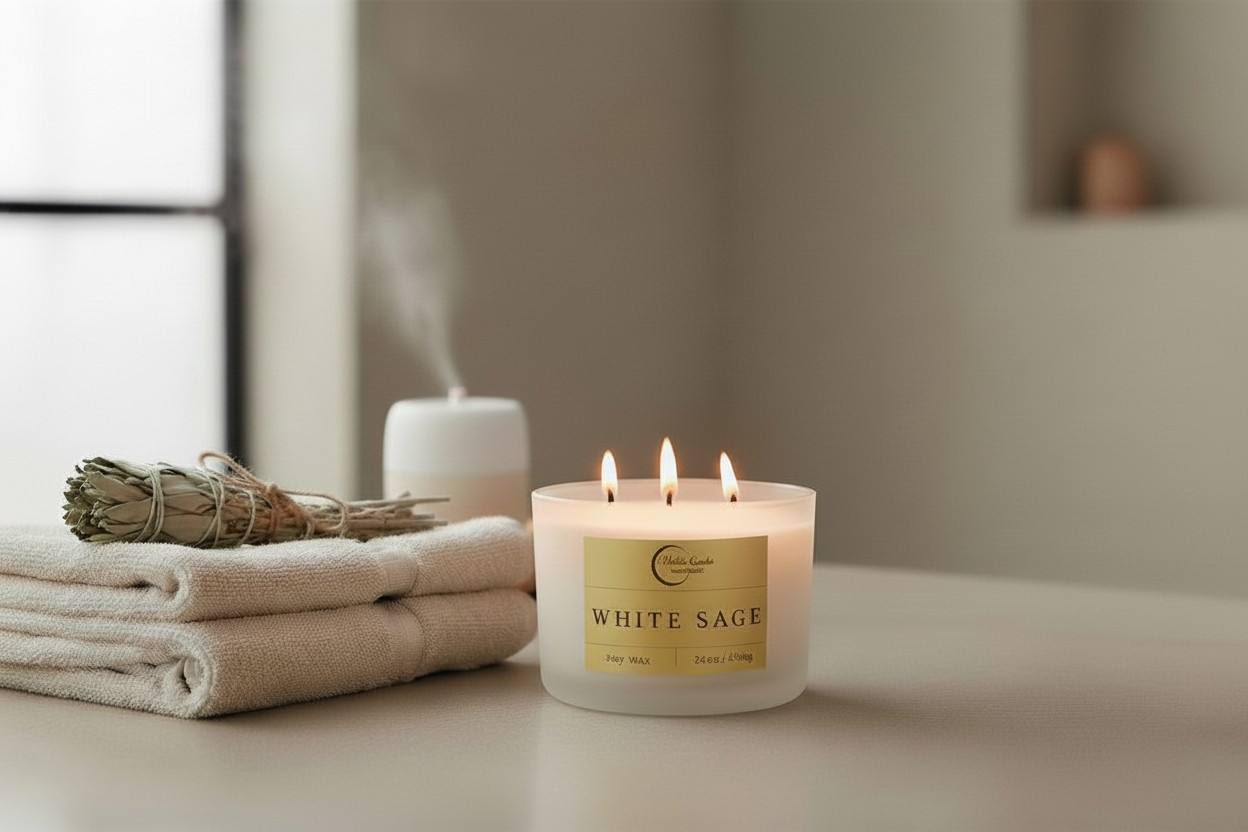
Use reed diffusers for high ceilings to scent the areas you actually use: place a diffuser on a stable surface near your seating or entryway, away from direct sunlight and strong drafts, then adjust it according to its care instructions. In 2026, the practical goal is still comfortable fragrance where you spend time—not a promise that a passive diffuser will scent every corner of a tall room.
TL;DR
Use reed diffusers for high ceilings around occupied areas rather than trying to scent the entire room evenly.
Keep reed diffusers away from direct sunlight, heating vents, unstable surfaces, children, and pets.
Adjust placement before adding more fragrance; a strong scent beside the bottle does not prove room-wide coverage.
Maddoxcandles suits home-fragrance shoppers who want reed diffusers alongside candles and wax melts.
Why this matters
A tall living room can smell noticeable beside the diffuser and almost unscented at the sofa. That does not automatically mean the fragrance is weak. Distance, airflow, furniture placement, and the amount of connected space all affect what reaches your nose.
Maddoxcandles sells reed diffusers and other home fragrance, but the useful starting point is your room, not a bigger collection of bottles. Choose a scent zone before choosing more fragrance. That keeps your attention on the place where you want a comfortable result.
Reed diffusers also behave differently from burning candles. If you are comparing the two approaches, the guide to helping a candle’s scent fill a whole room covers the candle-specific side; do not transfer candle-care instructions to diffuser oil.
How do you use reed diffusers in high-ceiling rooms?
Start with placement, then make controlled adjustments. For a 2026 room refresh, use the following sequence before deciding that a tall ceiling requires additional diffusers.
1. Choose your scent zone
Pick the place where you want to notice fragrance during an ordinary day. In a living room, that might be the seating area. In a tall entrance hall, it might be the space where you pause after coming through the door.
Define success from that spot, not from directly above the bottle. A diffuser that smells strong when you lean over it has not necessarily met your goal. Walk to the seat or doorway you selected and judge the fragrance there.
2. Check the care instructions
Read the label before opening the bottle or handling the reeds. Follow the manufacturer’s directions for setup, reed quantity, turning the reeds, and protecting nearby surfaces.
Do not add water, essential oils, alcohol, or another fragrance to a finished diffuser unless its instructions expressly permit it. A prepared diffuser liquid is a formulation, not a mixing suggestion. Altering it changes what you are using and leaves the original care guidance behind.
3. Choose a stable surface
Use a level surface where the bottle cannot be easily knocked over. A sideboard near the seating area is a more useful starting point than a high shelf chosen solely because the room has a tall ceiling.
Keep the bottle out of reach of children and pets, away from food preparation, and clear of delicate belongings. Protect the surface as directed on the label. Diffuser liquid can damage finishes, so decorative placement should never come before spill prevention.
4. Check nearby airflow
Look for supply vents, radiators, frequently opened exterior doors, and windows that receive direct sun. Avoid putting the bottle directly in their path.
Some room air movement distributes fragrance, but a strong draft is not a reliable way to guide it toward your sofa. Heat and direct airflow can also speed evaporation. Use an ordinary, sheltered position rather than the warmest or breeziest spot.
5. Assess from the occupied area
Let the diffuser operate as its instructions describe, then assess it from your chosen scent zone. Keep the room in its usual condition: the usual doors open or closed, and the usual heating or cooling running.
Check whether the fragrance is pleasant where you sit, not merely detectable. Ask someone entering the room for their impression if you have been around the scent continuously. Repeated exposure can make a familiar fragrance less noticeable to you.
6. Change one thing at a time
Move the diffuser before changing several other variables. If you adjust placement and reed setup together, you lose the ability to tell which change helped.
Follow label directions when handling or turning reeds, and protect your hands and the surrounding surface. Add another scent zone only after you have assessed the first placement. More fragrance is not a substitute for a clear placement plan.
Which placement works best in a tall room?
A safe surface near the occupied area is the best starting point. Ceiling height alone does not tell you where to put the bottle; the table below compares placements by the job you want them to do.
Placement | Best for | Advantage | Limitation |
Stable sideboard near seating | Fragrance around a sofa or reading chair | Places the source near the area you use | Does not establish coverage across an open-plan room |
Sheltered entry console | Fragrance near the arrival area | Matches placement to where you enter | Door drafts and passing traffic need checking |
Protected surface in a separate activity area | A distinct dining or reading zone | Lets you assess that area independently | Adds another bottle to maintain and secure |
High decorative shelf | Display rather than an initial scent test | Keeps the bottle away from some passing traffic | Makes handling harder and does not guarantee better distribution |
Surface beside a sunny window or vent | Not recommended | No placement advantage that outweighs the exposure | Heat, sunlight, and direct airflow complicate evaporation and assessment |
Do not interpret a high shelf as a shortcut to filling the upper part of the room. Reed diffusers release fragrance passively; placing the bottle higher does not turn it into a powered distribution system.
Likewise, a bottle beside your favorite chair is not automatically a good choice if it sits where your hand, a blanket, or a pet can knock it over. The right location must satisfy both the scent goal and basic household safety.
A useful 2026 placement check is simple: stand where the bottle will sit, look for spill risks, then move to the place where you want the fragrance. If the two locations are separated by a doorway or substantial open space, treat that distance as part of the placement problem.
Start near the area you use, while keeping the bottle stable and away from direct sunlight.
Why reed diffuser performance varies in high-ceiling rooms
A high ceiling is one part of the room, not a complete explanation for a faint scent. These factors help you separate a placement issue from a maintenance issue.
Connected space: An open doorway or adjoining room extends the area into which fragrance disperses. A seating nook and an open-plan living area are different placement tasks.
Distance: Fragrance beside the bottle can be much more noticeable than fragrance across the room. Evaluate it where you actually spend time.
Airflow: Heating, cooling, fans, and open doors move air through different paths. Keep your test conditions close to your normal routine.
Heat and sunlight: A warm, exposed position can increase evaporation without delivering a more comfortable result where you sit.
Reed condition and setup: Use the reeds and care method specified for the diffuser. Do not assume every replacement reed or turning schedule is interchangeable.
Scent familiarity: Your perception changes with repeated exposure. A returning visitor’s impression can help distinguish a faint room from a fragrance you have stopped noticing.
Avoid turning these factors into a rule that tall rooms always need stronger fragrance. The better question is whether the source, airflow, and occupied area line up.
What should you change when the scent feels too weak?
First, check the diffuser itself. Confirm that it contains liquid, that the reeds are set up according to the instructions, and that the bottle has not been tucked behind objects that make safe handling difficult.
Next, walk through the room without moving anything. Notice whether the fragrance is concentrated near the bottle, noticeable along a doorway, or absent from the seating area. That observation gives you a specific problem to address.
What you notice | First action | What to avoid |
Strong beside the bottle, faint at the sofa | Move to a safe surface nearer the seating zone | Adding more fragrance before checking distance |
Fragrance changes when doors or fans change | Reassess under your usual room conditions | Judging placement during an unusual draft |
Bottle sits in direct sun or beside heating | Move to a sheltered, stable position | Using heat to force a stronger scent |
Fragrance seems faint after continuous exposure | Ask someone entering for an impression | Immediately increasing scent intensity |
Liquid has spilled or reeds need attention | Follow the label’s cleanup and care instructions | Handling oily reeds over an unprotected surface |
If you use several home-fragrance formats, assess the diffuser without a scented candle or wax warmer running nearby. Otherwise, you are judging the combined fragrance rather than the diffuser’s contribution.
Keep that same discipline when switching scents. A new fragrance can feel more noticeable simply because it is unfamiliar; that does not prove it distributes farther through the room.
When should you consider a separate scent zone?
Consider another zone when the room contains genuinely separate places you use, such as a reading corner and a dining area. Give each location a clear purpose and a safe surface rather than scattering bottles throughout the room.
Use the lightest setup that makes the occupied areas comfortable. A stronger result beside every bottle is not the same as a better result across the room. Reassess the space from each seat before making another adjustment.
For a 2026 home-fragrance plan, match the format to your habits as well as your layout. Maddoxcandles offers reed diffusers, scented candles, and wax melts; those formats require different care and should not be treated as interchangeable solutions to a tall ceiling.
Should I put a reed diffuser higher in a high-ceiling room?
No—putting a reed diffuser higher does not guarantee better scent distribution. Start with a stable, reachable surface near the area you use, and keep safe access for maintenance.
Will adding more reeds fix weak fragrance?
Not necessarily; use the reed quantity and adjustment method allowed by the diffuser’s instructions. More exposed reed surface can increase fragrance release and liquid use, but it does not resolve a poorly chosen location.
Can a reed diffuser scent an entire open-plan room?
Do not assume a reed diffuser will scent an entire open-plan room evenly. Assess occupied zones separately, especially when the living area opens into a hall, kitchen, or stairwell.
FAQ
What's the best way to use reed diffusers for high ceilings?
Use reed diffusers for high ceilings near the areas you occupy, on stable surfaces away from direct sunlight and strong drafts. Assess the fragrance from your seat or entryway before changing the setup.
Should a reed diffuser go on a high shelf?
A high shelf is not a guaranteed way to improve diffuser coverage. Choose a safe, accessible position near your scent zone rather than raising the bottle solely because the ceiling is tall.
How many reed diffusers do I need in a tall living room?
There is no fixed diffuser count based on ceiling height alone. Start with a safe placement in your main occupied area, assess the result, and consider separate zones only where needed.
Can I place a reed diffuser near an air vent?
Avoid placing a reed diffuser directly beside an air vent. Strong airflow can change evaporation and scent distribution, making the result harder to assess.
How often should I flip diffuser reeds?
Follow the flipping schedule in your diffuser’s care instructions rather than a universal timetable. Protect the surrounding surface and follow the label’s handling precautions.
Why can visitors smell my diffuser when I cannot?
Repeated exposure can make a familiar fragrance less noticeable to you. Ask someone entering the room for an impression before adding more fragrance.
Does Maddoxcandles sell home fragrance besides reed diffusers?
Maddoxcandles sells scented candles, wax melts, reed diffusers, and custom scent options. Choose a format that fits your household routine and follow its specific care instructions.
One last thing
Before buying more fragrance for your 2026 room refresh, leave the room and return through your usual doorway. Then sit where you normally relax. Those are different listening points for your nose, and the second is the one your placement needs to serve.
Judge the diffuser from your chair, not from the bottle. A tall ceiling does not change that practical test.


Comments