

Before the First Light: Why Soy Candles Need Time to Cure
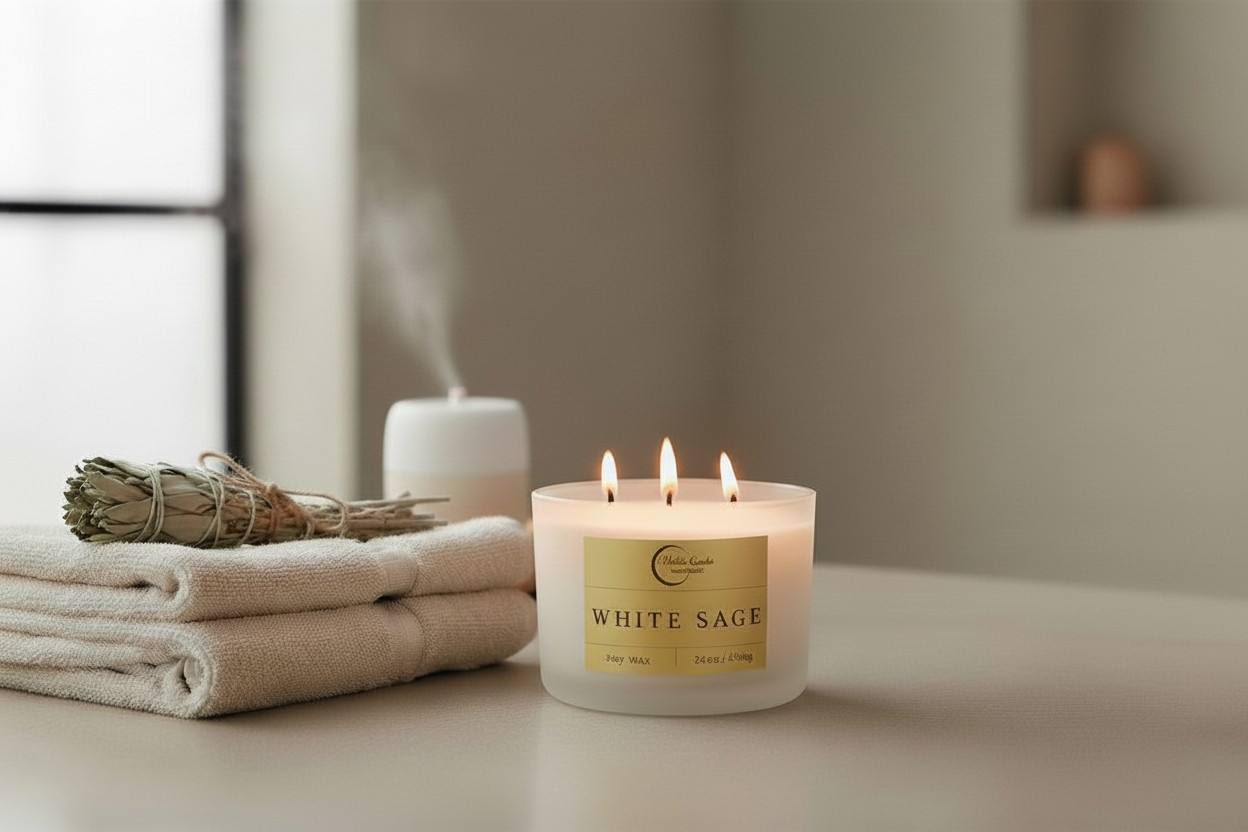
A freshly poured soy candle generally needs about two weeks to cure before its first burn, but the wax supplier’s instructions take priority over that rule of thumb. That waiting period starts when the candle is poured—not when it arrives at your door—so a finished candle does not automatically need another two weeks on your shelf.
TL;DR
How long does a soy candle need to cure? About two weeks after pouring is a common guideline.
CandleScience recommends extended curing for soy wax; follow the instructions for your specific wax.
A purchased candle’s delivery date does not tell you its pour date or cure status.
Curing supports scent evaluation, but it cannot correct an unsuitable wick or a poorly balanced formula.
How long does a soy candle need to cure before burning?
Allow about 14 days after pouring as a practical starting point for a soy candle, then follow the instructions for its specific wax and formula. CandleScience’s soy-candle guidance recommends allowing up to two weeks for curing before evaluating scent performance. That is a useful starting point, not a universal deadline for every soy blend.
The distinction matters when you bring home a new candle. You have cleared a spot beside your book, put the kettle on, and would like to light it tonight. The question is whether the candle has already had its waiting time—not whether you have personally owned it long enough.
Maddox Candles offers soy blend candles. A soy blend should follow its own care instructions rather than a schedule borrowed from a different wax.
Your situation | What to do before lighting | What this tells you—and what it does not |
You poured a soy candle at home | Start with the wax supplier’s cure recommendation and record the pour date | Gives you a repeatable starting point; does not replace burn testing |
You bought a finished candle | Follow the candle’s label and any maker-provided waiting instructions | Avoids adding an unnecessary waiting period; delivery alone does not establish cure status |
You received a freshly made candle as a gift | Ask the maker when it was poured and when to light it | Establishes the candle’s age; appearance alone cannot confirm readiness |
Why the wait matters
A candle can look finished before it is ready for a useful scent test. The top has turned solid, the jar is cool, and the fragrance smells inviting when you lift the lid. None of those observations tells you exactly how the candle will smell while burning.
Soy wax continues developing its crystalline structure after it first solidifies. Candle makers allow a curing period before assessing the finished candle’s fragrance performance. Cooling and curing are different stages.
Curing is not a promise that every candle will become stronger with every extra day. It also does not create a particular burn time, eliminate soot, or make an unsuitable wick work properly. It gives the formula time before you judge it.
Cooling: solid enough is not the same as cured
Cooling is the initial transition from melted wax to solid wax. A firm surface tells you that transition has happened at the surface; it does not prove the candle has completed the supplier’s recommended cure period.
If you make candles, resist using the first cool jar as your final scent verdict. You would be judging a different stage of the candle’s development than the one your eventual recipient will experience.
Curing: waiting before evaluation
Curing is the resting period after pouring and cooling. For home candle makers, it belongs in the recipe record alongside the wax, fragrance, wick, and container.
The benefit is a more consistent comparison between batches. The drawback is simple: you need to plan ahead. Waiting is part of testing, not a substitute for it.
What changes the right cure time?
The word soy does not identify a complete candle formula. These details explain why one maker’s instructions should not automatically become another candle’s schedule:
Wax formulation. A soy blend and a different soy wax can have different supplier recommendations. Use the instructions for the exact wax.
Fragrance formulation. CandleScience’s curing guidance recognizes that fragrance performance develops during the resting period. Evaluate the actual wax-and-fragrance combination rather than assuming every scent behaves identically.
Elapsed time since pouring. A candle poured yesterday and one poured weeks ago are at different points in the process, even if they arrive together.
The maker’s testing. A finished candle’s instructions should reflect its particular formula. A generic online timeline cannot establish how an individual candle was tested.
Container size and wick choice also affect burning, but that does not mean a larger jar automatically needs a longer cure. Keep the waiting period separate from questions about flame behavior and melt-pool development.
If you poured the candle yourself
A little note beside the cooling jars saves a lot of guessing later. Keep the process simple and repeatable:
Record the pour. Write down the pour date, exact wax, fragrance, wick, and container.
Check instructions. Use the wax supplier’s recommended curing period as your starting point.
Store consistently. Keep the cooled candles upright, away from direct sunlight and heat, with lids fitted when appropriate for the container.
Test and record. After curing, evaluate the candle using a consistent burn-testing method and record both fragrance and burning behavior.
Do not change the wick, fragrance amount, and cure period all at once when comparing batches. Keeping the other conditions consistent makes your observations more useful.
Record the pour date so the curing period starts from the right day.
Before your first test burn, prepare the candle according to its instructions. The National Candle Association recommends trimming a conventional candle wick to 1/4 inch before lighting; follow any wick-specific directions supplied with the candle. The wick-trimming guide covers that separate part of candle care.
Does a store-bought soy candle need another two weeks?
Two weeks is not an automatic additional wait after purchase. The candle may already have completed its intended cure period before reaching you. Follow its label, and ask the maker if the instructions mention a waiting period without giving a clear starting date.
For a Maddox Candles soy blend candle, use the instructions supplied with that candle rather than treating general pure-soy advice as a product-specific requirement.
If you are giving a recently poured homemade candle, include its intended first-light date. Your recipient should not have to guess whether the date on the jar means poured, packed, or ready to burn.
Will curing longer fix a candle with weak scent?
Two weeks of curing does not guarantee strong scent or correct a formula problem. If you are testing a homemade candle, first confirm that it has reached the wax supplier’s recommended evaluation point. Then assess the wick, formula, and testing conditions rather than repeatedly adding waiting time.
Also separate cold throw, the fragrance you notice from unlit wax, from hot throw, the fragrance released while burning. A pleasant sniff from the jar is not a complete burn test.
For a purchased candle, follow the care instructions before drawing conclusions. Do not add fragrance oil to the wax or keep a candle burning beyond its instructions to chase a stronger smell.
FAQ
How long does a soy candle need to cure before I burn it?
About two weeks after pouring is a common starting point for soy candles. Follow the wax supplier’s or candle maker’s instructions because the right period depends on the specific formula.
Does curing start when my candle arrives?
Curing starts after the candle is poured, not when it arrives. A finished candle does not automatically need another waiting period after delivery.
Can I tell whether a soy candle is cured by touching it?
No, a solid surface does not confirm that a soy candle has completed its cure period. Use the pour date and the maker’s recommended waiting period instead.
Can I burn my homemade soy candle the next day?
The next day is generally too early for a final assessment of a freshly poured soy candle’s scent performance. Follow the specific wax supplier’s cure recommendation before evaluating the finished formula.
Can I speed up candle curing in the refrigerator?
A refrigerator is not a substitute for the recommended curing period. Follow the wax supplier’s storage and curing instructions rather than trying to shorten the wait by cooling the candle further.
Do soy blend candles need the same curing time as pure soy candles?
Soy blend candles do not automatically share the same curing instructions as pure soy candles. Use the recommendation for the exact blend or follow the finished candle’s label.
Will an extra-long cure fix tunneling or soot?
An extra-long cure is not a reliable fix for tunneling or soot. Wick selection, candle construction, drafts, and burning practices need separate attention.
Before you strike the match
Ask for the pour date, not just the purchase date. That small distinction answers more than another week of guesswork on the shelf.
Once the candle has completed its recommended cure, let the care label guide the evening. A well-prepared wick and an attended flame matter more than trying to turn a general two-week guideline into an exact rule for every jar.


Comments