

Reed Diffusers and Air Vents: Placement, Not a Connection
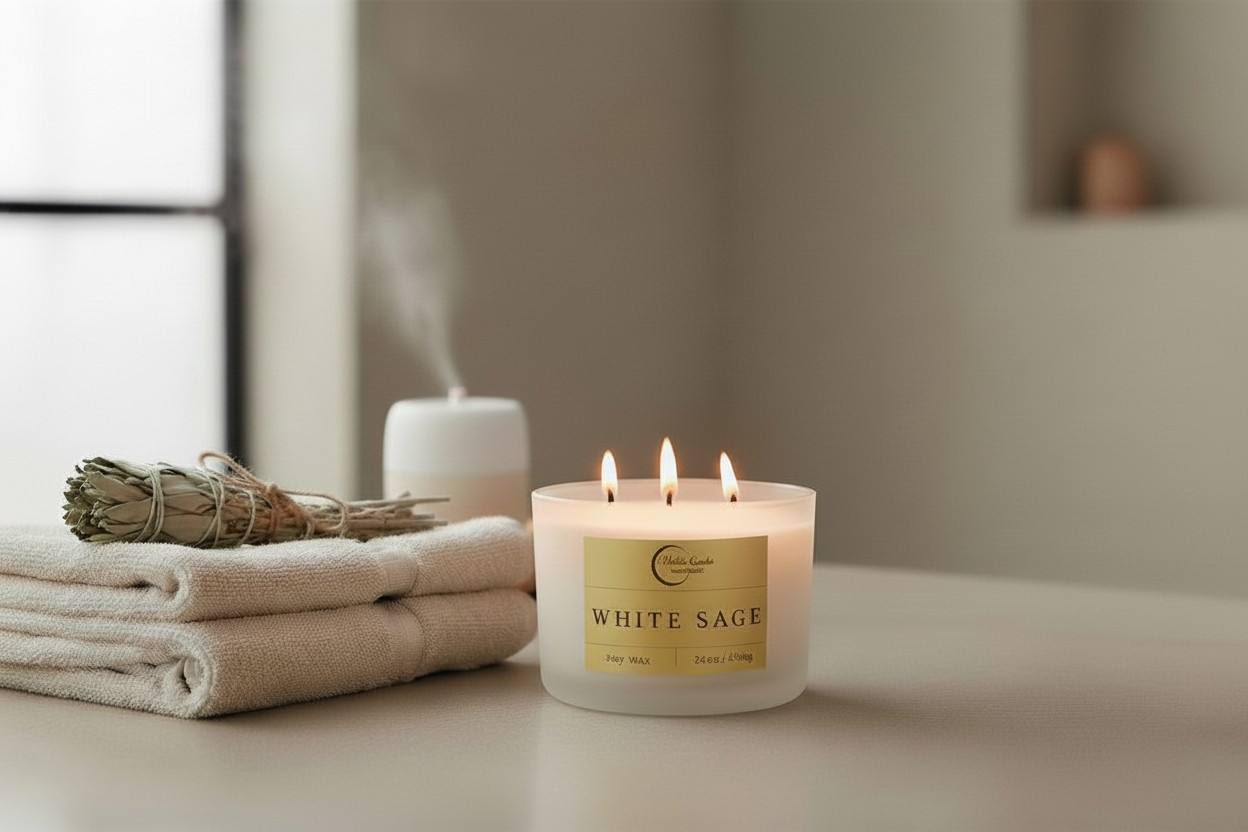
Instead of trying to connect a reed diffuser to an HVAC vent, place it upright on a protected, stable surface outside the direct airflow so it fragrances the room without becoming part of the heating or cooling system. If your hallway console sits beside a register, the fix is a different spot—not a bracket, hose, or vent attachment.
TL;DR
Reed diffuser HVAC vent placement means keeping a passive diffuser separate from vents, ductwork, and direct drafts.
Maddox Candles offers reed diffusers for home fragrance shoppers, not as HVAC equipment.
Choose a stable, protected surface away from direct airflow, heat, and places where the bottle can tip.
Follow the diffuser’s instructions for reeds and maintenance; do not add fragrance oil to registers or filters.
A room fragrance, not a ventilation accessory
A passive reed diffuser works without a fan, electrical connection, or heat source. Liquid travels into the reeds through capillary action, and fragrance evaporates from their exposed surfaces. Moving the bottle beside a vent does not turn it into a whole-home scent system.
The right placement supports a pleasant room; it does not modify your HVAC system. Keep the bottle, reeds, and liquid out of registers, return grilles, filters, and ducts. Leave ventilation openings unobstructed.
Maddox Candles sells reed diffusers alongside other home fragrance options. That makes the practical question where to place a diffuser in your home—not how to connect one to equipment it was not designed to use.
Before you move the bottle
You do not need installation tools. Gather the diffuser’s instructions and look at the room while the heating or cooling system is operating normally.
Read the product label. Check the directions for setup, reed handling, surface protection, and any location restrictions before opening the bottle.
Choose a suitable landing spot. Use a level, stable surface with an appropriate protective tray, outside the reach of children and pets and away from food preparation.
Watch for the hidden draft. A table that feels still between heating cycles can sit directly in the airflow once the system starts. Check placement during normal operation, not just while the room is quiet.
Do not improvise a mount if the only available spot is a vent ledge. Leave the diffuser unopened until you have somewhere suitable to put it.
A placement check that takes the guesswork out
The simplest reed diffuser HVAC vent placement rule is to keep the diffuser out of the vent’s direct airflow and off the vent itself. There is no universal distance that fits every room: vent direction, furniture, and the diffuser’s own instructions all matter.
The surface and surrounding space
Identify a stable tabletop or shelf where the bottle will not be knocked by bags, curtains, doors, or passing elbows.
Check that the surface is away from direct sunlight, heat sources, and the path of the HVAC airflow.
Add surface protection suitable for the diffuser liquid and the furniture beneath it. A decorative tray alone does not establish that a surface is protected.
Leave enough clear space around the reeds to avoid brushing them when you use the room.
Expected result: The bottle stands securely on a protected surface, with the reeds clear of surrounding objects and no vent beneath or directly beside the setup.
A pretty shelf is not automatically a practical shelf. If you have to reach past the reeds to get your keys every morning, choose another location.
The airflow check
Wait for the heating or cooling system to run normally. Do not change system settings just to push fragrance around.
Check whether air from a register blows directly across the proposed spot. Hold your hand near the location without touching the diffuser liquid or reeds.
Look for nearby return grilles as well as supply registers. Do not place the bottle on a grille, in front of an opening, or where a spill could enter it.
Move the proposed location if it sits in a direct draft, then check again during normal operation.
Expected result: Your diffuser location remains outside direct HVAC airflow, and both supply and return openings stay clear.
Check the location before opening the diffuser, then follow its own setup directions.
The label check and setup
Set up the diffuser exactly as its manufacturer directs, using the specified liquid and reeds.
Handle reeds over a protected surface. Follow the label’s directions for contact with the liquid and cleaning up drips.
Place the assembled diffuser in the checked location without leaning the reeds against a wall or fabric.
Assess the fragrance from where you normally sit or walk, rather than with your face above the bottle.
Expected result: The diffuser operates as a freestanding room fragrance, with no attachments to the vent and no liquid on nearby surfaces.
Do not assume every diffuser needs the same reed count or flipping schedule. Product instructions take priority over a general home-fragrance routine.
Which location makes sense?
A console, a side table, and a vent ledge are not interchangeable. Use this comparison to narrow the placement—not to promise a particular scent strength.
Location | Best for | Advantage | Limitation or reason to avoid |
Stable console outside direct drafts | An entryway with a protected, low-traffic surface | Keeps the diffuser separate from HVAC equipment | Bags, keys, and passing traffic still create tipping risks |
Stable side table away from seating edges | A living area with an unobstructed surface | Places fragrance in the room you actually use | A nearby seated person can find the fragrance too strong |
Secure shelf away from vents and sunlight | A room with limited tabletop space | Keeps the bottle out of everyday tabletop activity | Height alone does not make a shelf inaccessible or spill-proof |
Vent, register, or return grille | Not recommended for passive reed diffusers | No placement advantage justifies using HVAC hardware as a stand | Creates a spill path and puts the diffuser in or beside the airflow opening |
Choose the location for stability and comfort first, scent reach second. If every suitable surface puts fragrance too close to someone who dislikes it, leaving the room fragrance-free is a reasonable choice.
When the heating or cooling changes
A spot that works while the system is off deserves another look when heating or cooling resumes. The same applies after rearranging furniture, redirecting adjustable register louvers, or adding a nearby fan.
Repeat the airflow check without trying to coordinate the diffuser with the thermostat. A passive reed diffuser does not have a thermostat connection, an on-cycle, or a timed fragrance setting.
If a console becomes drafty during heating season, move the diffuser to another suitable surface. Do not close a register solely to preserve the display or place furniture over it to shield the bottle.
For a larger shared room, reed diffusers for open-concept living rooms addresses a different placement challenge. Keep that question separate from HVAC use: a larger space does not make a vent attachment appropriate.
When something still feels wrong
Change one part of the setup at a time. Moving the bottle, changing reed handling, and adding another fragrance all at once makes it harder to identify what helped.
The fragrance feels strong when the system starts
Check whether the bottle is still in the path of the supply air. Move it outside that direct draft and reassess the room before changing anything else.
If the fragrance remains uncomfortable, remove the diffuser from the occupied space. Follow the product instructions for storage or closure; do not improvise a stopper or leave oil-soaked reeds on furniture.
The liquid seems to disappear faster
Check for direct airflow, sunlight, nearby heat, or a leak. Air movement and warmth can increase evaporation, but the bottle’s changing level alone does not identify the cause.
Move the diffuser to a suitable location and follow its care directions. Do not dilute the liquid with water or add another oil unless the manufacturer explicitly permits it.
You cannot smell it from your usual chair
Check the setup against the label before moving the bottle closer to a vent. Confirm that the reeds and liquid are the intended combination and that you have followed any stated maintenance directions.
Assess the room after spending time elsewhere, rather than repeatedly smelling the bottle at close range. If the result still does not suit the space, reconsider the location or whether a passive diffuser meets your expectations; do not expect it to scent every connected room.
An unpleasant smell returns when the HVAC starts
Do not treat stronger fragrance as the fix. Remove the diffuser from the troubleshooting process so you can distinguish the room fragrance from the unwanted odor.
The question of dirty ducts and indoor air quality belongs to identifying potential air-quality sources, not deciding where to put a fragrance bottle. A reed diffuser cannot tell you whether ducts need cleaning, and a pleasant smell does not establish that indoor air is clean.
For a persistent unexplained HVAC odor, seek an assessment from a qualified HVAC professional. Do not pour fragrance into the system or spray a filter to cover it.
A drip reaches the furniture
Stop handling the reeds and follow the label’s spill instructions. Use the furniture manufacturer’s care guidance before applying a cleaner; an unsuitable cleaner can create another problem.
If liquid enters a register or equipment opening, stop using that placement and seek appropriate cleanup guidance. Do not push a cloth or tool into ductwork to chase the spill.
Make the workflow fit the people at home
The best placement is not necessarily the most noticeable one. A welcoming hallway can carry a little fragrance without making every seat in the living room part of the same scent experience.
Maddox Candles is a home-fragrance retailer, not an HVAC scenting service. Treat its reed diffusers as room accessories and follow the instructions supplied with the specific product.
Before adding another diffuser, ask whether anyone using the space would prefer less fragrance. In shared homes and workplaces, agreement matters more than matching a display to the furniture.
Keep the routine simple: check the bottle’s stability when cleaning nearby, revisit airflow after room changes, and handle the reeds only as directed. There is no reason to adjust the thermostat for the diffuser.
FAQ
Can I connect a reed diffuser to my HVAC vent?
No. A passive reed diffuser is a freestanding room-fragrance product, not a vent attachment. Keep its bottle, reeds, and liquid out of registers, filters, return grilles, and ductwork.
How far should a reed diffuser be from an air vent?
There is no universal distance for every diffuser and room. Follow the product’s placement instructions and choose a stable surface outside the vent’s direct airflow, checking while the HVAC system runs normally.
Should a reed diffuser go near a supply vent or a return vent?
Neither opening should serve as a diffuser stand or fragrance delivery point. Keep both clear and place the bottle on a separate protected surface where a spill cannot enter the opening.
Will a reed diffuser make my whole house smell good through the vents?
A passive reed diffuser is not a whole-home HVAC fragrance system. Judge its effect in the room where you place it rather than relying on ductwork to carry the scent.
Can I put reed diffuser oil on my HVAC filter?
Do not put reed diffuser oil on an HVAC filter. Use the liquid only as its label directs, and follow the HVAC manufacturer’s filter instructions.
Why does my diffuser smell stronger when the heating comes on?
Check whether the heating airflow passes directly across the diffuser. Relocate the bottle outside the draft and reassess comfort before changing reed handling or adding fragrance.
Do Maddox Candles reed diffusers need electricity?
A passive reed diffuser does not need an electrical connection. Follow the instructions supplied with the specific Maddox Candles product rather than connecting it to a fan, air purifier, or HVAC component.
One last placement tip
Check the spot while you carry out an ordinary task nearby. Open the drawer, hang up your coat, or put down your shopping bag before the diffuser is in place.
That everyday movement often reveals the awkward location a styled room photo hides. Choose a spot that works when the home is being lived in, not just when everything is still.


Comments