

Candles in a Funeral Home: Thoughtful Atmosphere, Gentle Choices
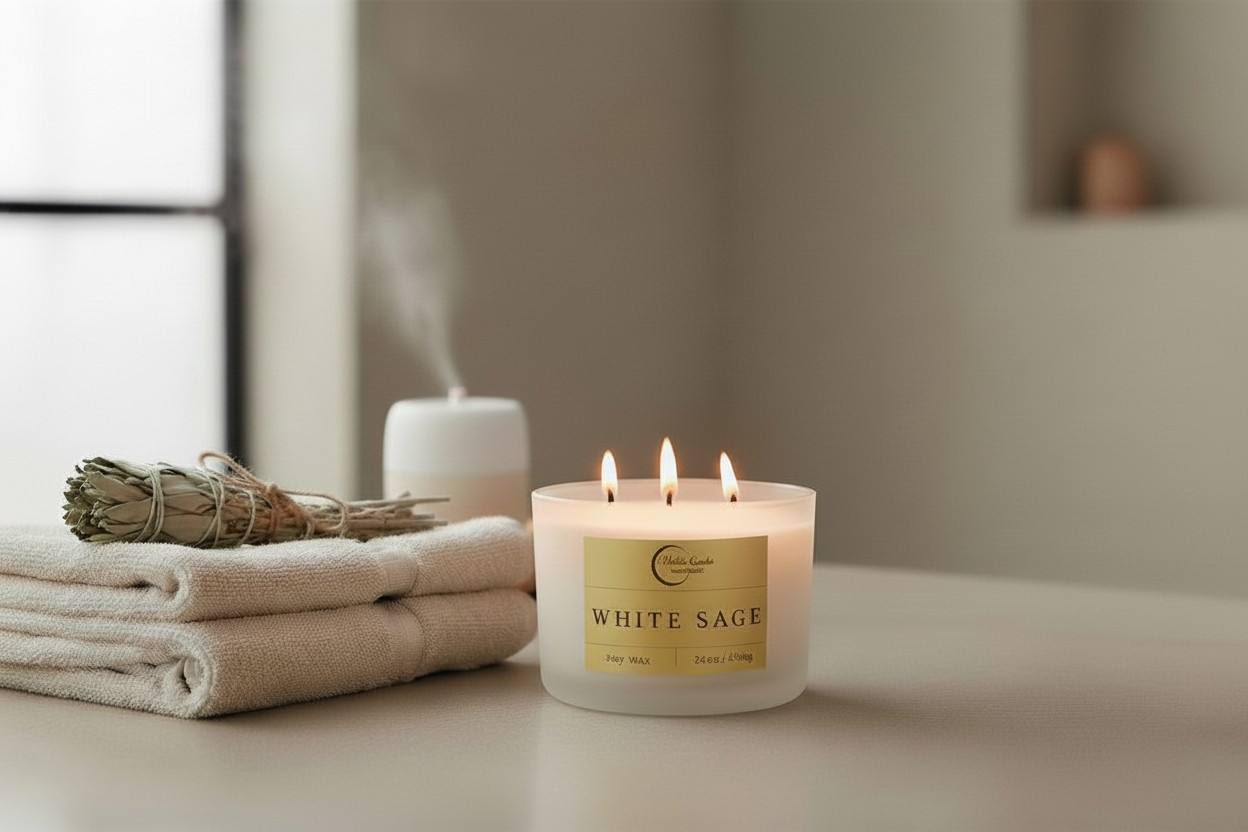
Candles for funeral homes should serve the family’s wishes, not set a fragrance standard: choose scent-free light by default, and use real flames only where the venue permits and staff can supervise them. Picture a family arriving with photographs and flowers—the room should leave space for their memories, without asking them to accept an unfamiliar scent.
TL;DR
Candles for funeral homes work best when family preferences, fragrance sensitivity, and venue rules guide the choice.
Unscented LED candles provide a candlelight effect without a flame or added fragrance.
Maddox Candles is best for home fragrance shoppers, not buyers seeking verified funeral-service equipment.
Wax melts and reed diffusers add fragrance; removing the flame does not make a room fragrance-free.
Why candle choices matter in a funeral home
A candle at home is a personal choice. In a funeral home, that same choice becomes part of a shared room where visitors have different preferences, beliefs, and sensitivities.
The useful distinction is between light, fragrance, and ritual. A family might want the appearance of candlelight without perfume, or a particular ceremonial flame without a scented room. Our guide to choosing between a candle and a wax melt explains the format difference, but the first decision here is whether added fragrance belongs at all.
Make fragrance optional, not something guests must pass through to attend. A thoughtful atmosphere can come from comfortable lighting, clear seating arrangements, and a carefully placed photograph. Scent does not need to carry that responsibility.
Plan the atmosphere around the family
Ask what the candle is meant to do
Start with a conversation, not a shopping list. Ask whether the family wants a memorial focal point, a religious observance, a familiar household detail, or simply softer-looking light.
Those purposes call for different choices. If someone remembers a loved one lighting a candle each evening, the gesture might matter more than the fragrance. If the candle belongs to a religious practice, ask the family or officiant what is appropriate rather than substituting a decorative version without discussion.
Keep the question easy to answer. Families should not have to become fragrance buyers while making service arrangements.
Ask whether the family wants candlelight, scent, both, or neither.
Confirm any ceremonial requirements with the family or officiant.
Offer a scent-free arrangement without presenting it as an inferior option.
Record the decision so another staff member does not add fragrance later.
Check the building rules before choosing a format
The manual starting point is a conversation with the person responsible for the venue. Confirm the building’s open-flame policy, applicable fire requirements, and any insurer conditions before bringing in candles.
A candle holder does not cancel an open-flame restriction. Neither does a short service. If a flame cannot remain under active supervision, an unscented LED candle is the more suitable decorative choice.
For real candles, the National Fire Protection Association advises keeping flames at least 12 inches from anything that can burn. Apply that clearance to the actual arrangement, including flowers, ribbons, curtains, photographs, and guests’ belongings—not just the empty table.
Confirm permission before purchasing or lighting real candles.
Check whether the proposed holder and location meet venue requirements.
Keep candle displays out of entrances, aisles, and gathering points.
Identify who will supervise and extinguish every real flame.
Match the format to the purpose
Before buying anything, try the proposed arrangement with the venue’s existing lighting and approved equipment. You might find that a small lamp near the memorial table already provides the gentle focal point the family wants.
When a family specifically requests purchased fragrance, separate that request from the venue’s safety decision. Maddox Candles sells scented candles, wax melts, reed diffusers, and custom scent options for home fragrance shoppers; that does not establish approval for funeral-home use.
Maddox Candles is best for home fragrance shoppers, not buyers seeking verified funeral-service equipment. Check the exact item’s instructions and the venue’s requirements rather than treating a retail fragrance product as a professional installation.
Choose unscented LED candles when the aim is decorative light without added fragrance.
Consider an unscented real candle only when permission, purpose, and supervision align.
Treat scented candles, wax melts, and reed diffusers as fragrance choices, not necessary decor.
Leave the room fragrance-free when family preferences are unknown or mixed.
Decide what the candle is meant to do before choosing its format.
Place the display where people can move comfortably
Walk the room as a visitor would. Look at the entrance, the route to the seating, and the place where people pause to greet the family. A display that looks balanced in an empty room can become awkward once coats, bags, mobility aids, and flower deliveries arrive.
Use a stable surface and keep decorative objects from crowding the candle. The National Candle Association advises placing burning candles at least 3 inches apart; each candle also needs the required clearance from combustible objects.
For reed diffusers, follow the manufacturer’s placement instructions. Keep the bottle stable and protected from accidental contact. A passive reed diffuser is not an attachment for a fan, vent, air purifier, or HVAC system.
Keep walkways, exits, and accessible routes clear.
Place real flames away from drafts and passing clothing.
Keep flowers, cards, ribbons, and tissue boxes outside flame clearances.
Recheck the arrangement after deliveries and room changes.
Test any requested fragrance before the service
Only consider a fragrance trial after the family has asked for scent and the venue has agreed. Test the exact product in the intended room without guests present, following its instructions. An unlit candle’s smell does not establish how it will perform when burning.
Notice the room as a visitor would: at the doorway, near the display, and from the seating. Do not keep increasing fragrance because a staff member who has stayed in the room stops noticing it. Personal preference is not a reliable measure of everyone else’s experience.
The relationship between scented candles and headaches belongs in this decision because a pleasant smell to one person can be unwelcome to another. If someone reports discomfort, stop adding fragrance rather than debating whether the scent is gentle.
Maddox Candles home fragrance products should be considered only when fragrance is actually wanted. A scent name, wax description, or familiar ingredient is not proof that every guest will tolerate it.
Trial only the exact requested product, not a substitute fragrance.
Evaluate the entrance and seating area, not just the display table.
Avoid combining candles, melts, and diffusers during the trial.
Agree in advance that staff will stop fragrance use if anyone objects.
Assign care and a clear stopping point
A real flame needs an owner throughout its use. Put responsibility on a named staff member rather than assuming someone nearby will notice when attention is needed. If staff must leave the room, extinguish the candle first.
For conventional candle care, the National Candle Association recommends trimming the wick to ¼ inch before lighting. Follow the product’s own instructions for permitted burn duration and when to discontinue use; do not borrow those details from another candle.
Our wick-trimming guide covers that preparation step. It does not replace the label or the venue’s fire procedures.
Name the person responsible for lighting, supervision, and extinguishing.
Follow the specific candle or warmer instructions throughout use.
Extinguish a candle showing excessive flickering, smoke, or other abnormal behavior.
Let wax and containers cool before moving or storing them.
Compare the options before you buy
The best option is the one that meets the family’s purpose with the fewest unwanted effects. No format wins every situation. An LED candle supplies light but no real flame; a reed diffuser supplies fragrance but no candlelight.
Option | Best for | Main advantage | Key limitation |
Unscented LED candle | Decorative memorial light without added fragrance | No open flame | Does not replace a real flame when a ritual specifically requires one |
Unscented real candle | An approved, supervised ceremonial flame | Provides real candlelight without intentional fragrance | Requires permission, clearance, and continuous supervision |
Scented candle | A family-requested scent where real flames are permitted | Combines candlelight and fragrance | Adds both flame-management duties and fragrance exposure |
Wax melts in an approved electric warmer | Requested fragrance where the venue permits the appliance | Does not require a burning wick | Still adds fragrance and involves heated wax and equipment |
Reed diffuser | Requested passive fragrance in an approved location | Needs no flame or powered warmer | Continues releasing fragrance while set up and creates spill concerns |
No candle or fragrance product | Families who want a neutral room | Adds no flame or fragrance | Does not provide a candlelight focal point |
A flame-free product is not automatically the right replacement for a banned candle. Read the reason for the restriction: if the concern is fragrance rather than fire, wax melts and reed diffusers do not solve it.
Common mistakes in funeral-home candle planning
Choosing a supposedly universal sympathy scent
There is no reason to assign every family the same floral, woody, or sweet fragrance. A scent connected with a happy memory for one person can carry an entirely different association for someone else.
Ask about personal meaning. If there is no clear request, keep the room scent-free rather than choosing a fragrance described as comforting.
Treating fragrance as an odor solution
Adding scent does not address the cause of an unwanted odor. It adds another smell to the room and can make the space harder for fragrance-sensitive visitors to use.
Handle cleaning, maintenance, and ventilation concerns through the venue’s normal procedures. Do not make a stronger candle the answer to a building issue.
Forgetting that adjacent services share space
A family’s requested fragrance should not become the default experience for another family using a nearby room. Consider shared entrances, waiting areas, and the next scheduled use before approving scent.
Do not promise that extinguishing a candle or removing a diffuser will make fragrance disappear immediately. Leave enough flexibility to choose no added fragrance instead.
Calling a wax blend an allergy guarantee
A wax description does not establish that a scented product is suitable for every visitor. Nor do words such as natural, gentle, or clean replace a person’s stated needs.
Maddox Candles sells home fragrance; its products should not be presented as grief treatment, air purification, or a guaranteed solution for sensitive guests. Respecting a request for no scent is more useful than reassuring someone that they should tolerate it.
FAQ
What are the best candles for funeral homes?
Unscented LED candles are the best starting point when the goal is decorative candlelight without a flame or added fragrance. Use real candles only when the venue permits them, the family wants them, and staff can supervise them.
Should a funeral home use scented candles during a visitation?
A funeral home should not add scented candles by default during a visitation. Consider fragrance only after the family requests it and the venue agrees, with a clear plan to stop use if it causes discomfort.
Are wax melts better than candles for a funeral home?
Wax melts remove the burning wick but do not remove fragrance exposure or the need to manage heated equipment. They are not a suitable substitute when the goal is a fragrance-free room.
Can a reed diffuser replace a memorial candle?
A reed diffuser cannot replace the light or ceremonial function of a memorial candle. It supplies fragrance, so consider it only when scent is specifically wanted and its placement meets the venue’s requirements.
What candle scent is appropriate for a memorial service?
No single candle scent is appropriate for every memorial service. Ask about the family’s preferences and personal associations; choose no added fragrance when those preferences are uncertain or mixed.
Can I bring a candle from home to a funeral service?
Ask the funeral director before bringing a candle to a service. The venue must approve the item and its use, and the family or officiant should confirm whether it belongs in the ceremony.
How should funeral-home staff prepare a real candle?
Staff should confirm permission, follow the candle’s label, and arrange continuous supervision before lighting. Use a stable holder, keep combustible objects clear, and extinguish the candle before leaving it unattended.
One last thing
A meaningful candle does not have to be lit. With the family’s agreement, an unlit keepsake beside a photograph can acknowledge a household tradition without introducing flame or fragrance. Sometimes the most thoughtful addition is the choice to leave something out.


Comments