

An Air Purifier and a Reed Diffuser: What to Consider
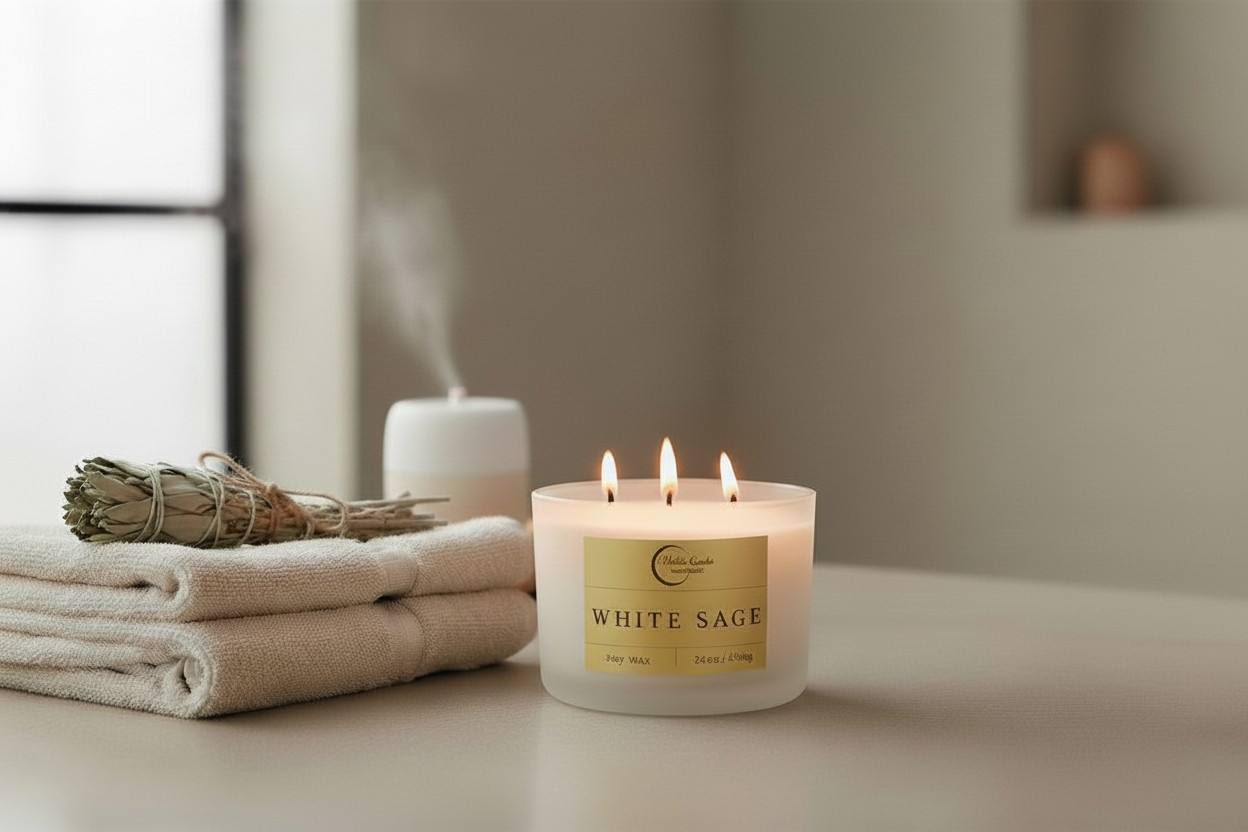
Instead of adding more reeds whenever your air purifier seems to weaken the fragrance, set up the purifier and reed diffuser separately, then adjust only the diffuser. You can use both in the same room, but air cleaning comes first: keep the purifier operating as directed and treat fragrance as an optional finishing touch, not proof that the air is clean.
TL;DR
Reed diffuser air purifier scent depends partly on filtration: particle filters and gas-removal filters do different jobs.
Keep passive reed diffusers separate from purifier intakes, outlets, fans, and vents.
Maddox Candles offers home fragrance, not a replacement for ventilation or air cleaning.
If fragrance bothers anyone sharing the room, remove the diffuser rather than trying to filter around it.
A comfortable room needs more than a pleasant smell
Picture a quiet evening: the room is tidy, the purifier is running, and you want a little fragrance near your reading chair. The goal is a comfortable space—not a contest between stronger scent and stronger filtration.
A reed diffuser releases fragrance as liquid travels through the reeds and evaporates. An air purifier filters substances from the air according to its design. These are separate jobs, and a pleasant smell does not tell you whether filtration is working.
Maddox Candles is for home fragrance shoppers who want an optional scent, not a substitute for air cleaning. If you are still deciding whether this format suits your room, start with the reed diffuser guide.
Before you start
Gather both sets of instructions. You need the purifier manual, its filter description, and the diffuser's handling and placement directions. Check whether the purifier contains a particle filter, activated carbon, or another gas-removal medium.
Choose a stable, protected surface. Keep the diffuser upright, away from edges and places where children or pets can reach it. Follow the product's precautions for spills and surface protection.
Know the easily missed limitation. A particle filter is not a fragrance-removal filter. Activated carbon can adsorb some gases, but its effectiveness depends on the filter and the substances involved; a carbon label does not guarantee complete scent removal.
If someone needs the room to remain fragrance-free, stop here and leave out the diffuser. A purifier does not turn added fragrance into a fragrance-free environment.
What each part of the setup actually does
The U.S. Environmental Protection Agency's Guide to Air Cleaners in the Home distinguishes particle filtration from gas-phase filtration. That distinction matters more than whether the purifier has a fragrance-related marketing claim.
Component | Best for | Useful role | Limitation |
Particle filtration, including HEPA | Removing airborne particles within the device's capabilities | Filters particles passing through the unit | Does not specifically remove gaseous fragrance compounds |
Activated carbon or other gas-removal media | Addressing certain gases and odors | Can adsorb some gaseous compounds | Performance depends on the media, amount, condition, and target substance |
Passive reed diffuser | Adding optional background fragrance | Releases scent without a flame or powered mechanism | Adds fragrance; does not clean the air or remove an odor source |
Choose filtration for the air-cleaning task, not for preserving a favorite scent. Keep the diffuser only if its fragrance remains welcome in the room.
A purifier that makes fragrance less noticeable is not necessarily malfunctioning. Equally, a room that still smells scented does not prove that the purifier has stopped filtering particles.
The purifier setup
Identify the installed filters. Read the manual and filter packaging rather than assuming that every filter layer does the same job. Note whether the unit includes a gas-removal stage.
Place the purifier according to its manual. Keep the specified clearance around its intake and outlet. Do not squeeze it behind furniture to preserve fragrance elsewhere in the room.
Use the operating mode recommended for your needs. Keep that setting consistent while you assess the diffuser. Do not switch the purifier off simply to make the fragrance stronger.
Check maintenance requirements. Follow the manufacturer's cleaning and replacement instructions. Do not remove a carbon filter to stop it from capturing fragrance.
Expected result: the purifier has unobstructed airflow, its intended filters are installed, and its operation no longer changes just because the scent seems faint.
There is no universal button sequence for this setup. Purifier controls differ, so use the labels and settings in your own manual rather than copying instructions for another model.
The diffuser placement
Select a separate surface. Keep the bottle off the purifier and away from its intake and discharge stream. The diffuser should stand independently, not function as an attachment.
Follow the diffuser's directions. Use only the reeds and liquid specified for that product. If the directions allow varying the reed count, begin with a restrained setup rather than immediately maximizing fragrance.
Avoid direct heat and strong drafts. Do not use a radiator, sunny windowsill, fan, or supply vent to force more evaporation. Follow any more specific placement restrictions on the label.
Protect the surface underneath. Use suitable protection consistent with the product instructions, and address spills promptly as directed. Do not place the bottle where a spill could enter electrical equipment.
Expected result: the diffuser stands upright on a suitable surface, outside the purifier's direct airflow, with no connection to the purifier or the room's ventilation system.
You do not need a universal distance measured across the room. The purifier's clearance requirements, the diffuser's instructions, and the actual furniture layout determine the placement.
Give the purifier clear airflow and the diffuser its own stable surface.
The scent check
Check the room before adding fragrance. Address obvious odor sources such as rubbish, damp materials, or cooking residue. A diffuser is not the fix for an unresolved source.
Keep other conditions reasonably consistent. Avoid changing purifier settings, diffuser placement, and reed count together. Otherwise, you cannot tell which change affected the experience.
Judge fragrance where you normally sit. Assess the scent from your chair or usual spot, not with your nose over the bottle. Ask others who share the room whether the fragrance is comfortable.
Change only the diffuser setup. If its instructions permit it, adjust the reed count or choose another suitable surface. Avoid repeatedly flipping reeds just to overpower filtration.
Remove fragrance if it causes discomfort. Follow the product's directions for closing or storing the diffuser. Do not assume the purifier will make continued use comfortable.
Expected result: you have a repeatable arrangement that keeps the purifier doing its job and makes fragrance optional rather than unavoidable.
Write down the placement and permitted reed adjustment that worked. A simple note is more useful than repeatedly changing everything whenever the room smells different.
When you want fragrance only in part of the home
A separate-room arrangement is another option when one space needs to remain fragrance-free. Keep the purifier where air cleaning is needed and consider a diffuser only in a different room where everyone using it welcomes fragrance.
This arrangement has limits. Open doorways and shared airflow can carry fragrance beyond the room where the bottle stands, so a closed door is not a guarantee of containment.
For a shared home, start with the people rather than the floor plan. If fragrance travels into someone's workspace or sleeping area, remove the source instead of adding another purifier to compensate.
A passive diffuser also has no scheduling switch. If you want fragrance only during a brief activity, consider whether an always-exposed bottle is the right format before setting it out.
When the setup isn't working
The scent becomes faint when the purifier runs
Check whether the purifier contains activated carbon or another gas-removal medium. That filter could be contributing to the change, although scent perception and room airflow also affect what you notice.
Keep the purifier configured as intended. Reassess diffuser placement or accept a lighter fragrance rather than weakening air cleaning to protect scent strength.
The purifier's display stays normal despite a strong smell
Check what the device actually measures. A particle reading is not a measurement of every gas or fragrance compound, and a sensor display is not a general guarantee of air quality.
If the scent feels excessive, reduce or remove the fragrance source. Do not wait for a display to validate what someone in the room is experiencing.
The diffuser seems to need constant refreshing
Check its liquid level and follow its reed-care instructions. Also consider whether the bottle sits in a strong draft or whether you have become accustomed to the scent.
Step away from the room before reassessing. Do not diagnose a failed purifier or depleted diffuser from smell alone.
An unpleasant odor remains underneath the fragrance
Find and address the odor source. Cleaning, appropriate ventilation, or resolving a moisture problem serves a different purpose from adding fragrance.
For persistent or unexplained odors, investigate the cause rather than layering more scent over it. Neither a pleasant fragrance nor a purifier display proves that the underlying issue is resolved.
Make the routine fit your home
Once placement works, resist the urge to keep adjusting it. Check that furniture has not blocked the purifier and that the diffuser remains upright on its protected surface.
If you choose to shop for home fragrance, Maddox Candles offers reed diffusers alongside candles and wax melts. Check the current product details and handling instructions before choosing; fragrance preference does not override the needs of the people sharing your space.
Keep the successful part of the routine simple: clear airflow, separate placement, and no pressure to add scent. An unscented room is a complete choice, not an unfinished decorating project.
FAQ
Can I use a reed diffuser and an air purifier in the same room?
Yes, provided both are used according to their instructions and everyone sharing the room welcomes fragrance. Keep the diffuser separate from the purifier, with its intake and outlet unobstructed.
Will an air purifier remove reed diffuser scent?
An air purifier with suitable gas-removal media can reduce some fragrance compounds, but removal is not guaranteed. A particle filter alone is not designed to remove gaseous fragrance.
Where should I put a reed diffuser near an air purifier?
Place the reed diffuser on its own stable, protected surface outside the purifier's direct intake and discharge airflow. Follow both manufacturers' placement instructions rather than relying on a universal distance.
Should I turn off my air purifier to make the scent stronger?
No—do not interrupt needed air cleaning just to preserve fragrance. Adjust the diffuser only as its instructions allow, or accept a lighter scent.
Can I put diffuser oil into my air purifier?
Do not add diffuser oil to an air purifier's filters, housing, or airflow path. A passive reed diffuser is a separate product, not a purifier accessory.
Why does my air purifier show clean air when the room smells strongly scented?
The display reflects the device's sensors, not every substance in the air. A particle sensor does not measure all gaseous fragrance compounds, so use the manual to understand what the reading means.
Does a purifier make fragrance suitable for someone who is sensitive to it?
No—a purifier does not establish that added fragrance will be comfortable or suitable for a fragrance-sensitive person. Leave out the diffuser when someone needs a fragrance-free space.
One last thing
A weaker scent is not a reason to assume the purifier has failed—or to assume the air is cleaner. Smell and filtration are different signals. Keep air-cleaning decisions tied to the purifier's instructions and the source of the problem, then decide whether fragrance belongs in the room at all.


Comments