

Shopping for a 'Non-Toxic' Candle? Look Beyond the Promise
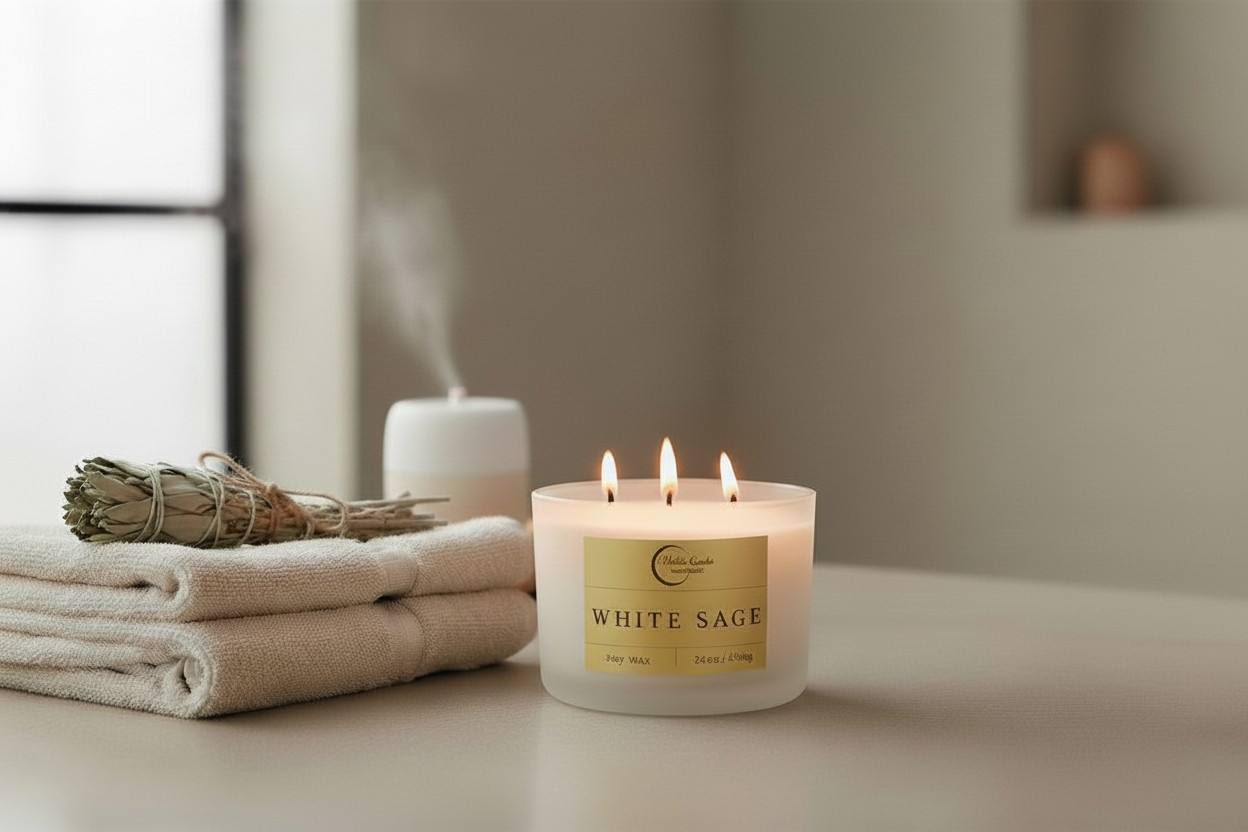
A candle labeled “non-toxic” is not automatically safer than a regular candle; the claim alone does not establish lower emissions, less irritation, or lower fire risk. You need evidence about the specific product, and even a well-made candle still needs careful use. When you’re choosing something for a quiet evening on the couch, clear instructions tell you more than a reassuring phrase on the jar.
TL;DR
Is a non toxic candle safer than a regular candle? The label alone does not establish a safety advantage.
The Federal Trade Commission requires evidence behind non-toxic claims; the wording is not a candle safety certification.
Wax type and fragrance origin alone do not prove that a finished candle is safer.
Follow candle-care instructions, and choose no added fragrance when scent bothers someone sharing your space.
Is a non toxic candle safer than a regular candle?
Not on the strength of that description alone. “Non-toxic” and “regular” do not identify two consistently defined candle formulations. Either description can cover different waxes, fragrances, wicks, and containers.
The Federal Trade Commission’s Green Guides say marketers making non-toxic claims should have competent and reliable scientific evidence that the product is safe for people and the environment. That is a requirement for supporting the claim—not proof that every product carrying it has passed the same independent test.
What you’re comparing | What it tells you | What it does not establish |
A candle labeled “non-toxic” | The seller is making a safety-related claim | Independent certification, lower emissions, or suitability for everyone |
A candle without that label | The seller has not made that particular claim | That the candle is more harmful |
A disclosed wax type | A material used in the candle | The finished candle’s overall safety |
Specific test results | Findings under the stated test conditions | The same result in every room or for every user |
Start with the care label, not the front-of-jar promise. A guide to trimming a wick before every burn addresses a practical step you can actually control.
Why this matters when you’re shopping
It’s easy to picture the choice as a good candle beside a bad one. The labels rarely give you enough information to make that judgment.
A soy candle, a paraffin candle, and a blended-wax candle all need a suitable wick and clear burning instructions. A pleasant smell does not establish low emissions, and an expensive jar does not establish better safety.
You also do not need to treat every candle as a household emergency. Separate the questions: do you enjoy the fragrance, does anyone sharing the room object to it, and can you use the candle according to its instructions?
Buy for the experience you want, but judge safety claims by their evidence.
What the common promises actually tell you
“Natural” describes an origin, not a safety result
Plant-derived ingredients are not automatically non-irritating. Essential oils are chemical mixtures, just as manufactured fragrance ingredients are chemicals; their origin alone does not determine their effects.
If a listing emphasizes essential oils, ask what that means for the finished candle. It is not a substitute for use instructions or evidence supporting a specific safety claim.
“Soy” identifies wax, not the whole candle
Soy wax tells you something about the candle’s material. It does not tell you everything about the fragrance, wick, dyes, blend ingredients, or burning behavior.
Likewise, “soy blend” does not mean pure soy. Read the wording as written rather than filling in details that the seller has not supplied.
“Clean-burning” needs an explanation
Ask what the seller means by “clean-burning.” Is the claim about visible soot, a particular measured emission, or something else?
A meaningful comparison identifies what was measured and under which conditions. “Cleaner” without a named comparison gives you little to assess.
“Phthalate-free” is a narrower claim
A phthalate-free claim concerns a group of substances. It does not establish that a candle produces no emissions or cannot bother someone sensitive to fragrance.
Treat narrow ingredient claims as narrow information. Do not turn them into a guarantee about the entire product.
A short check before you buy
You do not need a chemistry degree to read a candle listing. Look for information that answers a clear question rather than a collection of reassuring adjectives.
Read the materials. Look for the stated wax or wax blend, and distinguish disclosed details from broad terms such as natural.
Check the instructions. Find the wick guidance, burn limits, placement advice, and stopping point before lighting the candle.
Ask about evidence. If a safety claim drives your purchase, ask what supports it and whether the evidence covers the finished candle.
Consider the room. Think about who shares the space and whether fragrance is welcome there.
Keep the decision simple. If the explanation remains vague, do not pay extra merely for a safety-sounding label.
A useful seller response explains the claim’s limits as well as its meaning. An ingredient document is not the same thing as a test of emissions from the finished, burning candle.
Why candle exposure and risk vary
The phrase on the label is only one piece of information. These factors affect how you use a candle and what happens in the room:
Formulation: Wax, fragrance, additives, and wick work together; a single ingredient does not describe the finished product.
Burning behavior: A persistently smoking or unusually flickering flame calls for attention, not an assumption that the wax label makes it acceptable.
Room ventilation: Indoor pollutant concentrations depend partly on air exchange. Ventilation does not make an unsuitable product suitable for everyone.
Amount and duration: Burning more candles or leaving them lit longer changes the source of emissions in the room.
Individual response: Fragrance can bother some people even when others enjoy it. A household member’s discomfort matters more than a marketing claim.
Placement: Curtains, drafts, unstable surfaces, and nearby objects create hazards that a non-toxic label cannot prevent.
The U.S. Environmental Protection Agency identifies source control and ventilation as central approaches to improving indoor air quality. For a candle, that means considering whether to burn it at all—not simply trying to spread the fragrance farther.
Safer habits matter more than a reassuring label
Before lighting a candle, follow its specific instructions. The National Candle Association’s general guidance recommends trimming the wick to 1/4 inch, keeping candles away from drafts, and never leaving a burning candle unattended.
The National Fire Protection Association recommends keeping a lit candle at least 12 inches from anything that can burn. Choose a stable, heat-resistant surface, and extinguish the flame before leaving the room or going to sleep.
The National Candle Association also advises stopping a container candle when 1/2 inch of wax remains. Follow the product’s own stopping instructions if they require stopping sooner; do not keep burning simply to use every last bit.
If the candle persistently smokes or the flame behaves unusually, extinguish it and let it cool before checking the wick and instructions. Do not move a hot container or improvise a repair while the wax is liquid.
These habits address identifiable hazards. They do not depend on whether the jar says soy, natural, luxury, or non-toxic.
Are unscented candles safer than scented candles?
Unscented candles avoid added fragrance, but they still involve combustion and an open flame. That makes them an option for someone who wants candlelight without deliberately adding scent—not a guarantee of irritation-free use.
If fragrance bothers you, do not assume a different scented wax will solve the problem. An unfragranced, battery-operated candle provides a glow without a burning wick.
Are wax melts safer because they do not burn?
An electric wax warmer avoids a candle flame, but it still heats a fragranced product. Hot wax, heated surfaces, electrical instructions, and individual fragrance sensitivity still matter. A tea-light-powered warmer, unlike an electric model, still uses a flame.
For someone who enjoys home fragrance without a wick, Maddox Candles sells wax melts as well as candles. That is a format choice, not evidence that a particular product is non-toxic or appropriate for every household; review the details at Maddox Candles before choosing.
When is skipping fragrance the better choice?
Skip added fragrance when someone sharing the room finds it uncomfortable. A cozy space should feel welcoming to the people in it, not just smell pleasant to the person choosing the candle.
For a gift, ask whether the recipient enjoys fragrance before selecting a scent. For a shared workplace, follow the space’s fragrance and open-flame rules rather than relying on a reassuring product description.
If a candle causes discomfort, stop using it. Persistent or concerning symptoms belong in a conversation with a healthcare professional, not a search for stronger assurances on another label.
FAQ
Is a non toxic candle safer than a regular candle?
A non-toxic label alone does not prove that a candle is safer than a regular candle. Look for evidence supporting the specific claim, clear materials information, and practical burning instructions.
Does non-toxic mean a candle has been independently certified?
No, the words non-toxic do not by themselves identify an independent certification. Ask which organization assessed the product, what standard it used, and what the assessment actually covers.
Are soy candles always safer than paraffin candles?
No, wax type alone does not establish that one finished candle is safer than another. The formulation, wick, burning conditions, and evidence behind the comparison all matter.
Are essential-oil candles better for sensitive people?
Essential-oil candles are not automatically suitable for people sensitive to fragrance. Plant-derived fragrance ingredients can still cause discomfort, so do not treat natural origin as a guarantee.
Does a candle without visible smoke produce no emissions?
No, the absence of visible smoke does not mean a burning candle produces no emissions. Visible soot is not a complete measure of indoor air quality.
How far should a candle be from curtains or other objects?
Keep a lit candle at least 12 inches from anything that can burn, following National Fire Protection Association guidance. Use a stable surface and follow any additional placement instructions on the candle.
Should I keep using a candle if the fragrance bothers me?
No, stop using a candle if its fragrance causes discomfort. A non-toxic or natural claim does not override your response to the product.
One last thing
The most useful sentence on a candle may be its care instruction, not its biggest claim. Before you fall for the scent description, turn the jar around: a clear label and a candle you can use comfortably are more useful than a promise you cannot check.


Comments