

Reed Diffuser or Candle: Which Fits the Way You Spend Time at Home?
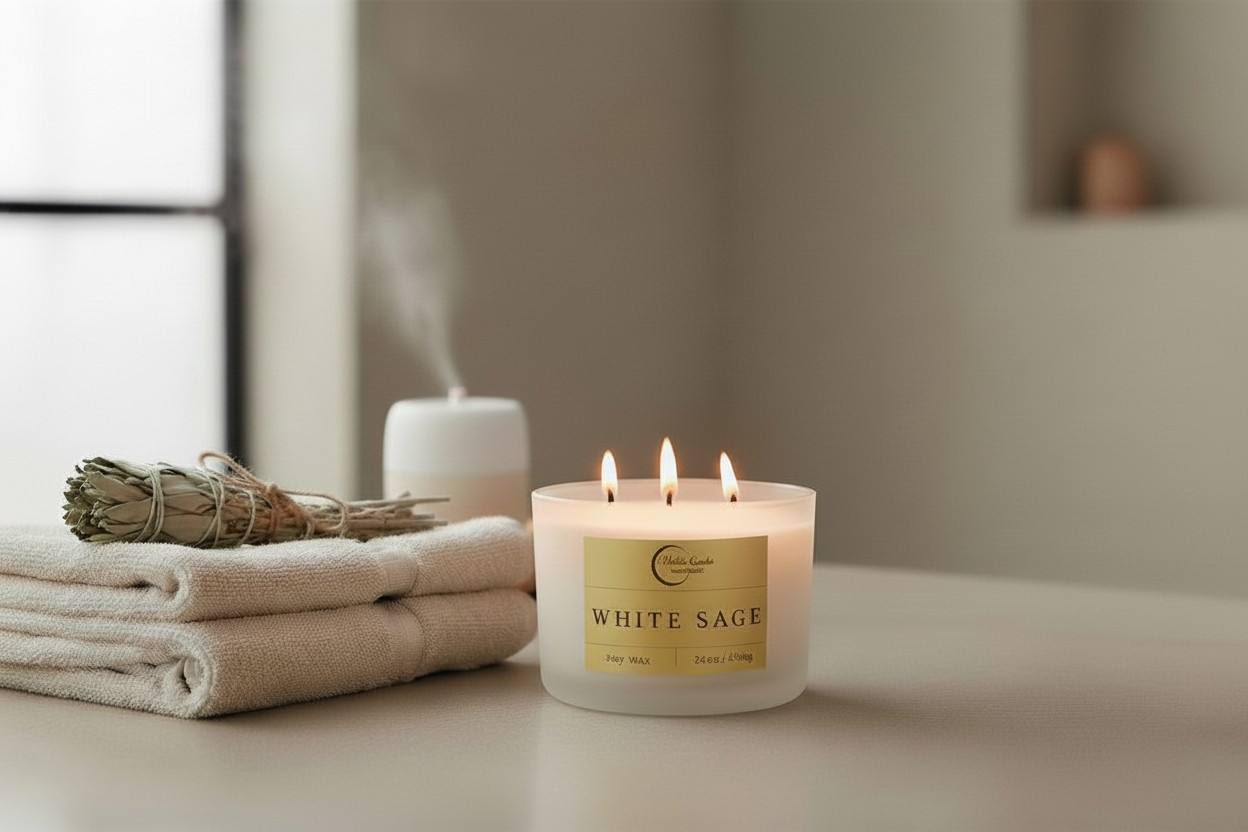
A reed diffuser is worth it compared to a candle if you want background fragrance without lighting a flame; a candle fits better when you want scent and a warm glow during time you spend in the room. The trade-off is control: a diffuser keeps releasing fragrance, while a candle needs your attention whenever it burns. Picture coming home to a gently scented entryway versus settling into your favorite chair and lighting a candle—those are different kinds of comfort.
TL;DR
Is a reed diffuser worth it compared to a candle? Choose background fragrance versus an attended, flame-lit ritual.
Reed diffusers suit steady fragrance, but their oil and placement still need care.
Candles suit intentional evenings, but every burning candle requires supervision.
Maddox Candles offers both home-fragrance formats; choose your routine before choosing your scent.
Is a reed diffuser worth it compared to a candle?
Choose a reed diffuser for background fragrance and a candle for a deliberate, attended moment. Neither format wins for every home. At Maddox Candles, the useful starting point is how you want to enjoy home fragrance—not which container looks nicest on the shelf.
What matters to you | Reed diffuser | Candle |
Best for | Background fragrance without a flame | Scent and candlelight while you stay nearby |
How fragrance releases | Liquid travels through reeds and evaporates | Heat releases fragrance as the candle burns |
Daily involvement | Placement, spill checks, and care according to its instructions | Wick care, lighting, supervision, and extinguishing |
Main advantage | No lighting routine or open flame | You choose when to light it and enjoy the glow |
Main drawback | Fragrance continues without a simple off switch | You cannot leave a burning candle unattended |
What not to assume | That flameless means harmless | That wax type removes the need for fire precautions |
The word worth matters here. A diffuser you enjoy whenever you walk through the door serves a different purpose from a candle you light only when you settle down with a book. Judge each by the experience you actually want, rather than expecting them to behave alike.
Why your routine matters more than the format
Think about the last ordinary evening you spent at home. Were you reading in one spot, or moving between the kitchen, laundry, and upstairs rooms? A candle asks you to remain attentive to a flame; a reed diffuser does not require lighting each time you enter the space.
That difference matters more than an attractive display. If you regularly leave a room without thinking, a burning candle is the wrong background accessory. If you like fragrance only during a particular activity, a diffuser's ongoing release can be the drawback rather than the benefit.
Choose the habit you can comfortably maintain. You do not need to become a candle person or a diffuser person throughout the whole house.
Reed diffuser: best for fragrance in the background
A reed diffuser suits the small moments between activities: hanging up your coat, walking down the hall, or stepping into a room you use throughout the day. Its appeal is that fragrance does not begin with finding a lighter.
The reeds draw up the fragrance liquid, which evaporates into the surrounding air. A passive reed diffuser needs neither a flame nor an electrical connection. It belongs on a stable surface according to its own placement instructions—not attached to a fan, vent, air purifier, or HVAC system.
What you gain
You remove the lighting-and-extinguishing routine. That makes a diffuser a practical option when you want fragrance to be part of the room rather than a separate evening activity.
You also avoid an open flame. That is a meaningful distinction, but it does not settle every household safety question: the bottle still contains a liquid that needs careful handling.
What you give up
A diffuser has no instant off switch. Removing reeds does not instantly remove fragrance already in the air, and you should follow the manufacturer's directions for closing or storing the bottle.
Spills are another consideration. Keep the bottle stable, protect the surface as directed, and place both the oil and reeds beyond the reach of children and pets. Do not treat a high shelf as suitable if someone can easily knock the bottle while reaching past it.
Best fit: you enjoy fragrance as part of the room and have a suitable place for an open diffuser bottle. Less suitable: you want a reliably fragrance-free room between uses.
Candle: best for a moment you choose
A candle fits the pause after the dishes are done, when the lamp is on and you have finally stopped moving. Lighting it can mark the beginning of your evening without asking fragrance to be present all day.
The flame is part of the appeal. A reed diffuser cannot offer that moving glow, and there is no reason to pretend the experiences are interchangeable.
What you gain
You decide when to light the candle. That gives you a clearer beginning and end to the burning session, although fragrance can linger after you extinguish the flame.
A candle also brings scent and light together. If the glow is the part you look forward to, choosing a diffuser instead leaves out something you genuinely value.
What you give up
A candle needs supervision for the entire time it burns. It is not a suitable way to keep a room scented while you run errands, sleep, or move elsewhere in the house.
There is also a care routine. Read the label, tend the wick as directed, use an appropriate surface, and extinguish the flame before leaving. Those steps are part of choosing a candle, not optional extras once the room feels cozy.
Best fit: you enjoy an attended fragrance ritual and candlelight. Less suitable: you want fragrance without having to keep track of a flame.
Why the experience varies from room to room
Neither “candle” nor “reed diffuser” tells you exactly how noticeable a particular fragrance will be. These practical differences explain why a format that works beside your reading chair does not automatically suit an open living area:
Room layout: an enclosed room and an open-plan space present different conditions for fragrance to disperse.
Air movement: drafts and ventilation affect how fragrance moves; keep candle flames away from drafts.
Placement: a protected, stable surface matters more than putting fragrance where it looks most decorative.
Product design: the fragrance formulation, reeds, wick, wax, and container belong to the individual product—not the category as a whole.
Your schedule: a room you pass through briefly calls for a different decision from one where you spend an attended evening.
Household preferences: a fragrance you enjoy is not automatically welcome to everyone sharing the space.
Do not fix disappointing results by immediately adding more fragrance. First check the instructions and placement. If someone dislikes added scent, leaving that room fragrance-free is a perfectly good answer.
Make the choice in three everyday steps
Start with the moment
Finish this sentence: “I want fragrance when I…” If the answer is “come through the front door,” background fragrance fits the goal. If it is “sit down with my book,” a candle fits the occasion more closely.
Check the placement
Find a stable location before choosing either format. A diffuser needs protection against tipping and spills; a candle needs a heat-resistant surface and clearance from anything that can catch fire.
Choose the responsibility
Decide which routine you actually want: handling and maintaining a diffuser according to its directions, or caring for and supervising a candle. Neither is completely maintenance-free.
Start with how you use the room, then check whether the placement and care routine fit.
If candles become an evening habit, keep the care habit too
A familiar routine can make it easy to stop noticing the flame. With burning a scented candle nightly, the practical question is whether you still check the placement, follow the label, and extinguish it before leaving or getting sleepy—not simply whether you enjoy the scent.
The National Candle Association's candle-safety guidance recommends trimming the wick to 1/4 inch before lighting and keeping candles at least 12 inches from anything that can burn. Its general guidance also advises against burning a candle for more than 4 hours at a time; follow any shorter limit on the candle's own label.
Treat those as care instructions, not targets to reach. You do not need to keep a candle burning until a maximum duration, and you should extinguish it whenever you can no longer supervise it. The wick-trimming guide explains that part of the routine in more detail.
A diffuser removes the flame, but its label still matters. Follow its handling instructions, avoid skin or eye contact with the liquid, and do not assume that a fragrance product is suitable around every person or animal simply because it is flameless.
Does a reed diffuser always last longer than a candle?
No universal lifespan comparison settles the choice. A candle's stated burn time measures burning, while a diffuser's stated duration describes an ongoing process influenced by its design and conditions of use.
Check the individual product's directions and any stated duration rather than translating one format directly into the other. A candle stored between occasional evenings and a diffuser left open continuously are not being used on the same schedule.
Is a reed diffuser better for a bedroom?
A reed diffuser avoids an open flame, but that does not automatically make added fragrance the right choice for your bedroom. Consider whether you want scent throughout the time you spend there and whether anyone sharing the room prefers no fragrance.
Never leave a candle burning while you sleep. If you enjoy candlelight before bed, extinguish the flame before you become drowsy—not after you have settled under the covers.
Can you use a candle and a reed diffuser in the same home?
Yes, but you do not need both in the same room. Let each format serve a clear purpose rather than layering fragrance simply because you own it.
For Maddox Candles home-fragrance shoppers, reed diffusers suit background scent; candles suit attended evenings. Start with one format in the space you use most, then decide whether another room genuinely needs something different.
FAQ
Is a reed diffuser worth it compared to a candle if I'm rarely home?
A reed diffuser is worth considering if you want fragrance when you return without lighting anything. It continues releasing fragrance while open, including when you are away, so choose it for that ongoing experience rather than occasional use.
Which is better if I only want fragrance sometimes?
A candle fits occasional, attended fragrance sessions better than an open reed diffuser. Extinguishing the candle ends the burning session, although the scent does not disappear immediately.
Are reed diffusers completely maintenance-free?
Reed diffusers are not maintenance-free. Follow the product's instructions for setup, reed handling, placement, and disposal, and check that the bottle remains stable and free from spills.
Does a reed diffuser make a room smell stronger than a candle?
Neither format is always stronger. Fragrance formulation, product design, placement, room layout, and air movement all affect the experience.
Is a reed diffuser safe around pets?
A reed diffuser is not automatically safe around pets just because it has no flame. Prevent access to the oil and reeds, and ask your veterinarian about concerns involving your animal and the specific product.
Do I need fragrance in every room?
You do not need fragrance in every room. Keep shared spaces fragrance-free when that better respects the people using them, and choose added scent only where it is welcome.
One last thing
Before choosing, look at where you naturally put down your book, hang your coat, or pause at the end of the day. That spot tells you more about the right format than a shelf full of matching containers.
Choose a diffuser for the welcome; choose a candle for the pause. Maddox Candles offers both, so the decision can begin with the way you live—not a rule that one format must be better.


Comments